
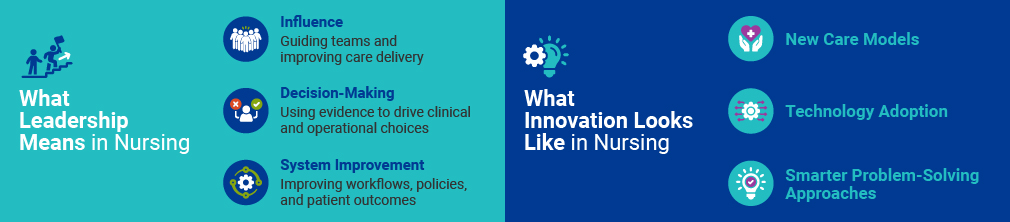
Leadership in nursing is no longer limited to charge nurses or executive roles, it’s a core competency shaping the future of healthcare. As clinical environments grow more complex, nurses are increasingly expected to lead change, influence systems, and drive innovation across care settings. At the same time, innovation in nursing has become essential to improving patient outcomes, workforce sustainability, and healthcare access.
Together, leadership and innovation in nursing expand the profession far beyond bedside care. Nurses today are systems thinkers, problem-solvers, and change agents who influence policy, technology adoption, and organizational strategy. Understanding how these forces intersect is critical for working professionals and prospective students planning long-term nursing careers.
This topic matters now more than ever. Healthcare systems are facing workforce shortages, rising patient acuity, and rapid digital transformation. Advanced nursing education (particularly leadership-focused MSN programs) has emerged as a key pathway for preparing nurses to meet these demands with confidence and impact.
The Current State of Nursing Leadership and Innovation
The current state of nursing reflects both unprecedented strain and unprecedented opportunity. According to the U.S. Bureau of Labor Statistics, registered nurse employment is projected to grow 6% through 2032, driven by aging populations and chronic disease prevalence. At the same time, healthcare organizations are grappling with burnout, staffing shortages, and operational inefficiencies.
These pressures have elevated the importance of strong nursing leadership at every level. Nurse leaders are increasingly responsible for workforce planning, quality improvement initiatives, and cross-disciplinary collaboration. Innovation is no longer optional: it’s required to maintain safety, efficiency, and patient trust.
Nurses are uniquely positioned to innovate because of their proximity to patient care and system workflows. From bedside observations to administrative decision-making, nurses identify gaps that technology, process redesign, and new care models can address. Research published in Nursing World emphasizes that innovation is most effective when nurses are empowered to lead it.
| “Transformational leadership in nursing plays a significant role in promoting a positive, collaborative work environment. Through guidance, mentorship, and motivation, nurse leaders can inspire their teams to feel valued and respected. This increased empowerment leads to greater nurse retention and improved patient satisfaction and outcomes.” — Nursing World |
Why Leadership Skills Matter in Nursing
Core Leadership Skills in Nursing Practice
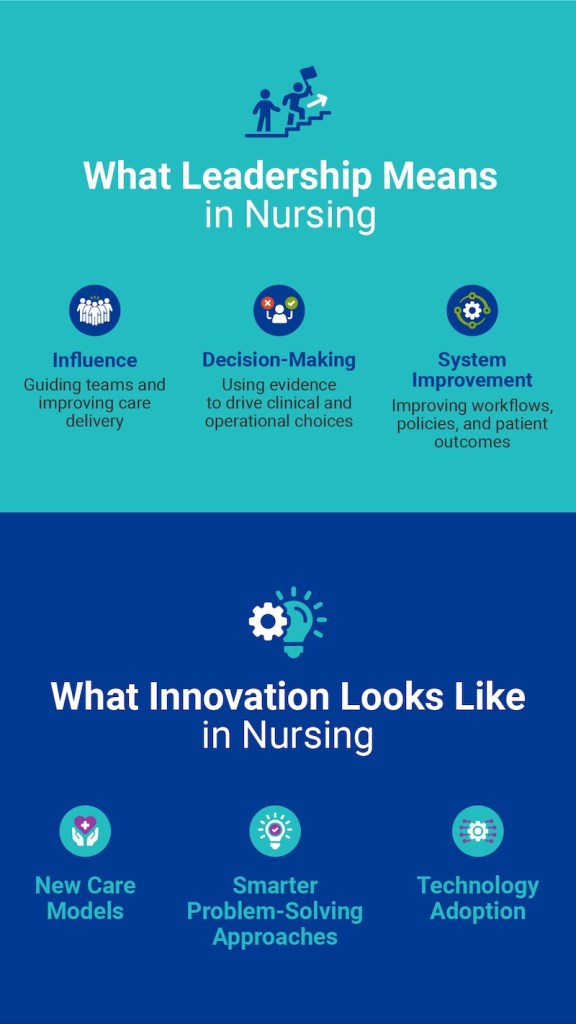
Leadership skills in nursing extend far beyond supervision. Core competencies include clear communication, collaboration across disciplines, and the ability to think strategically within complex systems. Nurses with strong leadership skills translate clinical insight into actionable decisions that improve care delivery.
Ethical and evidence-based decision-making is another cornerstone of effective nursing leadership. Nurse leaders must weigh patient needs, regulatory requirements, and organizational resources in high-stakes environments. These skills directly influence patient safety, staff engagement, and organizational performance.
Leadership Skills and Career Mobility
Leadership prepares nurses for expanded roles in management, education, quality improvement, and policy. Positions such as nurse manager, clinical director, and chief nursing officer require a blend of clinical expertise and leadership capability. Nurses who develop leadership skills gain greater influence and career flexibility.
According to the American Nurses Association, leadership development is essential for advancing professional nursing practice and improving health outcomes.
How Innovation Manifests in Nursing Practice
What Innovation Looks Like in Real Nursing Settings
Innovation in nursing is practical, not abstract. It often begins with identifying inefficiencies or safety risks and applying new methods to solve them. Examples include redesigning workflows, adopting digital tools, or improving patient education strategies.
Technology plays a growing role, but innovation also includes human-centered solutions. Care coordination models, staffing approaches, and communication protocols are frequent areas of nurse-led improvement. These changes often produce measurable gains in patient outcomes and staff satisfaction.
Nurse-Led Innovation Examples
Telehealth expansion offers a clear example of innovation in nursing practice. Nurses have led virtual triage programs, chronic disease monitoring initiatives, and remote patient education efforts. Community-based nursing programs have also improved access to preventive care and reduced hospital utilization. Innovation frequently starts at the front line. Nurses identify recurring challenges and, with leadership support, turn insights into scalable solutions.
Education and Training for Nurse Leaders and Innovators
Pathways to Leadership and Innovation Expertise
Formal education plays a critical role in preparing nurses to lead and innovate. Graduate degrees such as an MSN with a leadership focus, Doctor of Nursing Practice (DNP), and executive nurse leadership tracks build advanced competencies. These programs emphasize systems thinking, data-driven decision-making, and organizational change.
Professional certifications and leadership development programs further strengthen readiness. Continuous learning helps nurses adapt to evolving healthcare demands and emerging technologies.
How MSN Programs Support Leadership Development
MSN programs develop evidence-based practice skills that enable nurses to evaluate research and implement improvements. Coursework in leadership, healthcare policy, and change management prepares nurses to influence outcomes beyond individual patient encounters. Interdisciplinary collaboration is often embedded in program design.
National University’s MSN program is one example of an advanced degree pathway that prepares nurses to lead change in complex healthcare systems through flexible, career-aligned education.

Real-World Impact: Nurses Leading Innovation in Healthcare Systems
Nurse leaders are driving measurable improvements across healthcare systems. Hospital readmission reduction initiatives led by nurses have lowered costs while improving continuity of care. Quality improvement programs often rely on nurse-led data analysis and patient engagement strategies.
Digital health adoption is another area of impact. Nurses have spearheaded electronic health record optimization, remote monitoring programs, and patient safety dashboards. These initiatives improve efficiency while preserving patient-centered care.
Case studies consistently show that organizations with strong nursing leadership perform better on safety, satisfaction, and operational metrics.
The Transforming Health Care Through Innovative Nurse-Led Care Delivery Solutions initiative showed nurse leadership’s measurable impact across five health systems. Sites that tested nurse-led care model redesign (including virtual care and team restructuring) reported a 7.78% increase in nurses feeling they “love their job,” reduced staff burden, and improved patient outcomes as a direct result of innovation strategies led by nursing leadership.
| “Nurses are health care’s indomitable innovators and improvers… safe, high-quality, and equitable care with supportive leaders and healthy work environments… thrive as individuals, teams, and a profession.” — Patricia McGaffigan, MS, RN, Institute for Healthcare Improvement |
Challenges and Opportunities for Today’s Nurse Leaders
Common Challenges in Nursing Leadership
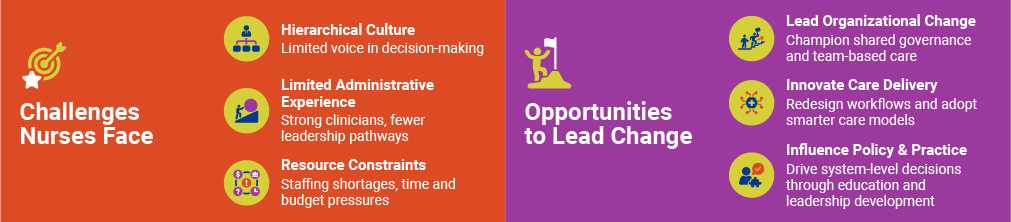
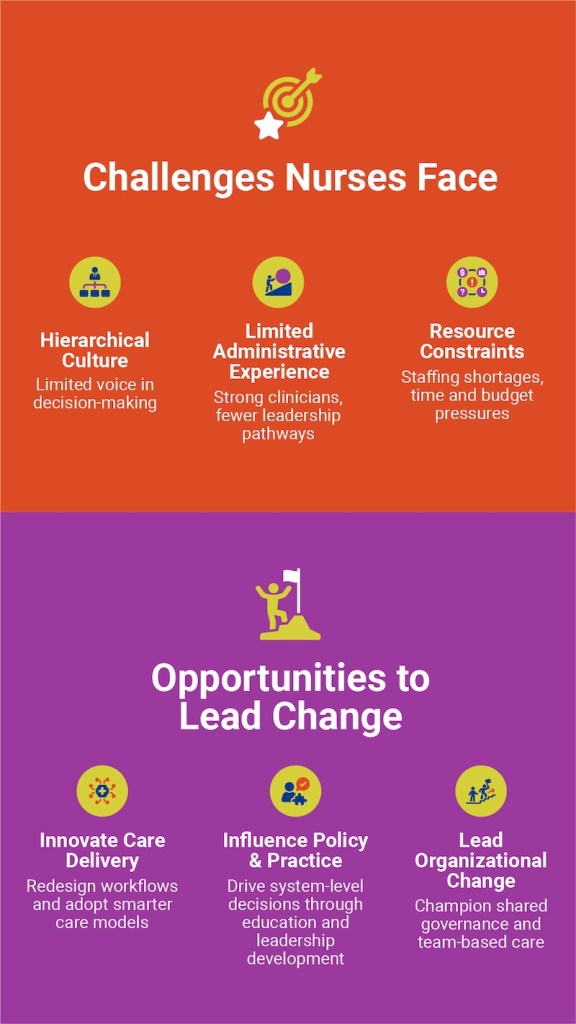
Despite growing demand, nurse leaders face real obstacles. Hierarchical organizational cultures can limit decision-making authority. Many nurses also report limited access to formal leadership training early in their careers.
Resource constraints and workload pressures further complicate innovation efforts. Without institutional support, even strong ideas may struggle to scale.
Turning Challenges into Opportunities
These challenges also create opportunities for leadership growth. Nurses who pursue advanced education and leadership development gain tools to navigate organizational complexity. Innovation thrives when nurses are equipped to advocate for change using data and evidence. Education and mentorship empower nurses to influence policy, redesign care models, and lead sustainable improvements.
Key Takeaways: Becoming a Nurse Leader and Innovator
Leadership and innovation in nursing are essential to the future of healthcare. Nurses who combine clinical expertise with leadership skills drive better outcomes for patients, teams, and organizations. Innovation emerges when nurses are empowered to identify problems and implement solutions.
Preparation requires intentional skill development, experience, and education. Advanced degrees such as MSN programs support nurses in expanding their impact across healthcare systems. Lifelong learning remains central to leadership readiness and career advancement.
Frequently Asked Questions
Innovation in nursing refers to developing and applying new approaches, technologies, or processes to improve patient care, efficiency, and outcomes. Examples include telehealth programs, workflow redesign, and community health initiatives.
Nurses become leaders through experience, skill development, mentorship, and education. Leadership-focused MSN programs and certifications support advancement into management, education, and executive roles.
Common roles include nurse manager, chief nursing officer, quality improvement director, and clinical educator. These positions require both strategic thinking and innovation capability.
Strong nursing leadership improves patient safety, care coordination, and staff engagement. Research consistently links effective nurse leadership to better clinical and organizational outcomes.


