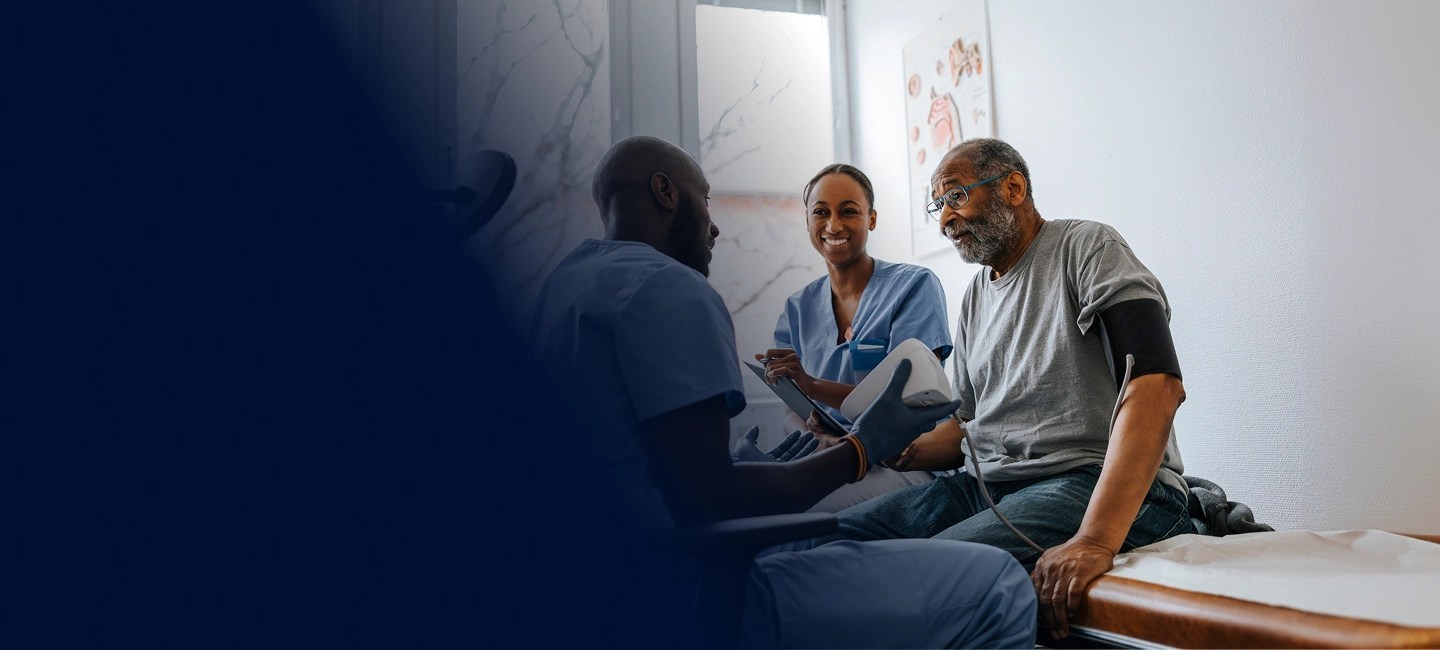
PREPARE FOR CALIFORNIA RN LICENSURE
Bachelor of Science in Nursing – Second Bachelor (California)
Accredited by



- CCNE-accredited program
- 4- and 8-week courses that fit your schedule
- No application fee, essays, or exams

Format
Onsite and Hybrid

Completion Time
This program is designed to be completed within 48 months. Some students finish in as few as 31 months at an accelerated pace. Actual time to completion varies based on transfer credit, course availability, enrollment status, and academic progress.
31 Months*

Credits
63

Average Cost Per Credit
$1,000
Program Overview
Why Get a Bachelor of Science in Nursing (BSN) – Second Bachelor (California)?
National University’s Bachelor of Science in Nursing (BSN) – Second Bachelor program is ideal for career changers with a prior bachelor’s degree who are motivated to enter the nursing profession. The program is designed to meet California Board of Registered Nursing (BRN) requirements and prepares graduates to sit for the NCLEX-RN®, the national licensure exam for registered nurses. It’s well-suited for students looking for a focused pathway into nursing without earning a second general bachelor’s degree.

California BRN-approved program

Year-Round Enrollment

Experienced Faculty and Mentors

Dedicated Career Support
Career Impact
Explore current career data, including projected job growth and earning potential.

*Data Source: The career outcomes data presented is sourced from Lightcast, which provides insights based on real-time job postings, public datasets, and analytics. Lightcast derives its data from sources such as the Bureau of Labor Statistics (BLS), the Quarterly Census of Employment and Wages (QCEW), and the Occupational Employment Statistics (OES). While accurate and reliable, this data reflects general labor market trends and may not represent individual outcomes or specific local conditions. For more details on Lightcast’s methodology, visit their Data Overview.
Professional Pathways
Registered Nurses
238,223
Job openings in the past year$97,284
Median SalaryNurse Practitioners
33,096
Job openings in the past year$131,535
Median Salary
*Data Source: The career outcomes data presented is sourced from Lightcast, which provides insights based on real-time job postings, public datasets, and analytics. Lightcast derives its data from sources such as the Bureau of Labor Statistics (BLS), the Quarterly Census of Employment and Wages (QCEW), and the Occupational Employment Statistics (OES). While accurate and reliable, this data reflects general labor market trends and may not represent individual outcomes or specific local conditions. For more details on Lightcast’s methodology, visit their Data Overview.
What You’ll Learn and Apply






Admission and Degree Requirements
How to Apply

Admission highlights:
- Transfer-friendly admission process
- Online application with personalized support
- Year-round enrollment opportunities
- Guidance from dedicated admissions advisors
Application requirements:
- Completed online application
- Official transcripts from previously attended institutions
- Proof of high school diploma or equivalent
- Personal statement or educational goals statement
- Resume or relevant academic background information
Degree Requirements

Requirements include:
- 120 semester credit hours required for graduation
- Minimum 30 credit hours completed through NU
- Minimum 51 credit hours completed at the upper-division level
Additional information:
- Students must meet NU residency requirements
- Students must maintain satisfactory academic progress
- LVN transcripts equivalency criteria must be met to receive nursing course credits

Complete Your ATI TEAS Requirement
at National University
National University is an authorized ATI TEAS testing location, offering onsite testing at our San Diego, Los Angeles, and Fresno campuses.
The ATI Test of Essential Academic Skills (TEAS) is a required admission component for many nursing programs, including NU’s Bachelor of Science in Nursing (BSN) pathways. Completing your exam at an NU testing center provides a convenient testing experience while helping you stay on track with your application process.
Why Test at NU?
- Convenient testing locations in San Diego, Los Angeles, and Fresno
- Professional onsite testing environment
- Opportunity to familiarize yourself with an NU campus
- Support your nursing school application timeline
- Available to NU students and other prospective nursing students
Important Information
- Registration is completed directly through the ATI website.
- Testing fees are paid directly to ATI.
- Available testing dates vary by location.
- Additional preparation resources may be available through ATI.
Explore Our Courses
Build advanced expertise in your field through career-relevant coursework.
Required for the Major
10 COURSES
Public Speaking
3.0 Semester Credit Hours
This class is an introduction to the principles and application of speaking effectively to diverse audiences in a variety of settings. Focus is on topic selection, organization, analysis of research, and delivery, with special attention on learning effective delivery skills.
Intro to Biomedical Statistics
3.0 Semester Credit Hours
An introduction to concepts, procedures and software used in the statistical analysis of data in the health professions.
Introduction to Psychology
3.0 Semester Credit Hours
A survey of the field of psychology that provides an overview of the scientific principles and theories in psychology. Topics include: biological psychology, abnormal behavior, motivation, emotion, sexuality and gender, and personality theory.
Principles of Sociology
3.0 Semester Credit Hours
Prerequisite: ENG 102
Critical introduction to basic sociology concepts. Examination of major theoretical perspectives and research methods. Topics include: economic stratification, race, gender, family, deviance, complex organizations.
Human Anatomy and Physiol I
3.0 Semester Credit Hours
Corequisite: BIO 191A, or BIO 201A; Recommended: Prior completion of: BIO 100; BIO 100A; CHE 101; CHE 101A
Areas of study include chemistry, cells, tissues, organ systems (integumentary, skeletal, muscular and nervous), and their functional relation to each other. Topics also include the aging process and diseases in these systems, as well as the development and repair of the organs and tissues in these systems. BIO201 should be taken with the co-requisite section of either BIO191A or BIO 201A with the same instructor (and classmates).
Human Anatomy and Physiol LabI
1.0 Semester Credit Hours
Corequisite: BIO 201; Recommended: Prior completion of: BIO 100; BIO 100A; CHE 101; CHE 101A or equivalent courses.
This laboratory course examines organ systems (skeletal, muscular and nervous). Students conduct cat/fetal pig dissections to identify and learn how skeletal muscles are organized according to body region. Sheep brain is used as a model to study human brain.
Human Anatomy and Physiol II
3.0 Semester Credit Hours
Corequisite: BIO 202A, or BIO 192A; Prerequisite: BIO 201 and BIO 201A
Organ systems (autonomic nervous system, endocrine, cardiovascular, lymphatic, respiratory, digestive, urinary and reproductive), and their functional relation to each other. In each system, the function of any specific molecules, cells, tissues, and organs are considered along with any diseases that may impact each system and how repair occurs.
Human Anatomy and Physiol LabII
1.0 Semester Credit Hours
Corequisite: BIO 202;
Prerequisite: BIO 201; BIO 201A
This laboratory course examines homeostasis in the heart, lungs, liver and kidneys, along with digestive, and urinary systems. Chromosomes, mitosis, meiosis, development and different types of inheritance through the testing of vision, hearing and taste and smell. Cat/fetal pig is used to study the internal organs.
Introductory Microbiology
3.0 Semester Credit Hours
Corequisite: BIO 203A Students should take both lecture and lab courses concurrently and with the same instructor to ensure a consistent learning experience. Students who are retaking one of the two courses or present special circumstances should petition for exception to this requisite.; Recommended: Prior completion of: BIO 100 and BIO 100A; CHE 101 and CHE 101A or equivalent courses; BIO 201 and BIO 201A; BIO 202 and BIO 202A
Biology of pathogenic and nonpathogenic microbes, including bacteria, fungi, protozoans, and viruses. The epidemiology of disease-causing agents is studied, along with the fundamentals of the human immune response. Students should take both lecture and lab courses concurrently and with the same instructor to ensure a consistent learning experience. Students who are retaking one of the two courses or present special circumstances should petition for exception to this requisite.
Introductory Microbiology Lab
1.0 Semester Credit Hours
Corequisite: BIO 203; Recommended: Prior completion of: BIO 100; BIO 100A; CHE 101; CHE 101A; BIO 201 and BIO 201A; BIO 202 and BIO 202A
This laboratory course introduced students to procedures for handling microbes, methods of identification of microorganisms (microscopic and by diagnostic media), preparation of stained slides and wet mounts, aseptic techniques, isolation of a single colony, preparation of a pure culture, inoculation and interpretation of select diagnostic tests. This two-month course is a combination of lecture and laboratory activities. Students should take both lecture and lab courses concurrently and with the same instructor to ensure a consistent learning experience. Students who are retaking one of the two courses or present special circumstances should petition for exception to this requisite.
Nursing Core Courses
27 COURSES
Nursing Theories and Models
3.0 Semester Credit Hours
Prerequisite: Admission into the Bachelor of Science in Nursing and completion of all non-nursing pre-requisite courses is required to enroll in this course.
This course facilitates the practice of professional nursing by providing students with an opportunity to experiment with the application of various nursing theories to evaluate their impact on nursing practice. Professional identity, professional practice and professional development in nursing will be emphasized.
Health Assessment
3.0 Semester Credit Hours
Corequisite: NSG 214A; Recommended Preparation: Admission into the nursing program and completion of required general education preparation with a minimum GPA 2.75
Introduction to foundational concepts of health assessment to systematically gather and analyze data using a patient-centered care approach. Concepts include obtaining a health-history, using therapeutic interviewing skills, performing a comprehensive head-to-toe and problem-focused physical exam, psycho-social and socio-cultural influences, and application of related current evidence. Concurrent enrollment in NSG 214A is required.
Health Assessment Clinical Lab
310 Semester Credit Hours
Corequisite: NSG 214 Admission into the nursing program and completion of required general education preparation with a minimum GPA 2.75.
Students will learn and engage in the practical application of a holistic patient-centered approach to health assessment as a basis for providing safe, quality nursing care. Students will practice the concepts learned in NSG 214. Current evidence will be utilized to demonstrate sociocultural variations on health assessment.
Nursing Research
3.0 Semester Credit Hours
Prerequisite: BST 322
This course explores evidence-based practice as a foundation for improved nursing practice and healthcare outcomes. Strong emphasis is placed on the application of research theory to evidence-based practice, including ethics in research and application of the research process.
Pharmacology in Nursing I
3.0 Semester Credit Hours
Prerequisite: NSG 214; NSG 214A
This course will present an overview of pharmacokinetics and pharmacodynamics of drugs, as well as drug classifications. Current issues in drug legislation, design, manufacturing and marketing will be explored. Emphasis will be placed on the role of the professional nurse in medication administration, including both expected and unexpected effects of drugs on patients.
Foundations of Nursing**
3.0 Semester Credit Hours
Prerequisite: NSG 214; NSG 214A; NSG 304; NSG 403; NSG 422
Corequisite: NSG 240A
The purpose of this course is to introduce basic nursing concepts of health/illness continuum, patient-centered care, environment of care, legal, ethical, and regulatory requirements, and professional nursing roles. This course implements the utilization of the nursing process based on scientific evidence to provide holistic care for adult and geriatric populations with stable health and chronic medical conditions. Concurrent enrollment in NSG 240A is required unless approved by the Department Chair.
Foundations Clinical Lab**
2.33 Semester Credit Hours
Prerequisite: NSG 214; NSG 214A; NSG 304; NSG 403; NSG 422
Corequisite: NSG 240
Students will begin to develop basic plans of care for adult and geriatric patients using nursing language. Practical application of beginning knowledge and skills required for nursing care of the adult and geriatric patients is demonstrated in both Lab and clinical settings through simulation and patient interaction. Students will practice skills in the Skills lab and then will progress to caring for patients with chronic and stable conditions in clinical settings. Each student will have opportunities to integrate theoretical information into nursing practice. Concurrent enrollment in NSG 240 is required unless approved by the Department Chair. Grading is S, U or I.
Medical-Surgical Nursing I**
3.0 Semester Credit Hours
Prerequisite: NSG 240 and NSG 240A
Corequisite: NSG 245A
This course focuses on concepts relating to care of adult and geriatric populations with stable chronic and acute medical-surgical problems. Emphasis of this course is on the use of the nursing process and in developing competence in providing nursing care for individuals with specific health care needs and problems. In addition, the student is provided with an orientation to coordination of patient care. Concurrent enrollment in NSG 245A is required.
Medical-Surgical I Clinical**
2.33 Semester Credit Hours
Prerequisite: NSG 240 and NSG 240A
Corequisite: NSG 245
Practical application of knowledge and skills required for nursing care of adult and geriatric patients with commonly occurring acute and chronic medical-surgical problems in laboratory and clinical settings. Concurrent enrollment in NSG 245 is required. Grading is by S, U or I.
Medical-Surgical Nursing II**
3.0 Semester Credit Hours
Prerequisite: NSG 214; NSG 214A
Corequisite: NSG 330A
This course focuses on concepts relating to care of the adult and geriatric patients with acute, complex, and critical medical-surgical problems. This course emphasizes the utilization of current evidence in providing and evaluating interdisciplinary management of adult and geriatric patients to support positive outcomes. Concurrent enrollment in NSG 330A is required.
Medical-Surgical II Clinical**
2.33 Semester Credit Hours
Prerequisite: NSG 214; NSG 214A
Corequisite: NSG 330
Practical application of knowledge and skills required for nursing care of adult and geriatric patients with acute and critical medical-surgical problems in laboratory and clinical settings. Concurrent enrollment in NSG 330 is required. Grading is S, U or I.
Child-bearing Family Nursing**
3.0 Semester Credit Hours
Prerequisite: NSG 330; NSG 330A
Corequisite: NSG 333A
The course focuses on the specialized health care needs of the childbearing family. Building on concepts from medical-surgical, pharmacology, research, and foundational nursing courses, health promotion, assessment, critical-thinking and therapeutic communication skills will be developed as they apply to care of culturally diverse childbearing families during the antepartum, intrapartum, and postpartum periods. Beginning with women’s health and infertility, fetal development, and normal physiology of pregnancy, acute pathophysiological disease processes affecting the mother and newborn will be included this course. Concurrent enrollment in NSG 333A is required.
Child-bearing Family Clinical**
2.33 Semester Credit Hours
Prerequisite: NSG 245; NSG 245A
Corequisite: NSG 333
This course covers practical application of knowledge and skills required for nursing care of families in the childbearing period. Using knowledge obtained in medical-surgical, foundational, pharmacological, and research courses along with knowledge gained in NSG333 theory, students will care for the patient and family during the antepartum, intrapartum, postpartum and newborn period. Concurrent enrollment in NSG 333 is required. NSG 333A is graded as Satisfactory/Unsatisfactory based upon successful completion of all course requirements.
Pediatric Nursing**
3.0 Semester Credit Hours
Prerequisite: NSG 333 and NSG 333A
Corequisite: NSG 334A
The primary purpose of this course is the continuing examination of the family as a unit, this course focuses on nursing care related to the health needs of children and adolescents and their families. Emphasis is placed on the variations in health care due to behavioral, genetic, cultural, environmental, and developmental factors. Concurrent enrollment in NSG 334A is required.
Pediatric Nursing Clinical**
2.33 Semester Credit Hours
Prerequisite: NSG 333 and NSG 333A
Corequisite: NSG 334
This course covers practical application of knowledge and skills required in nursing care for families with children. Using the language of nursing, students will care for the family with children as a unit, considering behavioral, life cycle, genetic, cultural and environmental factors. Concurrent enrollment in NSG 334 is required.
Psychiatric-Mental Health Nur**
3.0 Semester Credit Hours
Prerequisite: NSG 330; NSG 330A
Corequisite: NSG 335A
This course demonstrates the relevance of mental health nursing concepts to all areas of professional practice. It provides a conceptual integration of the nursing process, theories, and research from the biopsychosocial sciences and humanities to promote mental health and provide care to all patients with mental disorders. Emphasis is placed on the use of therapeutic self and effective therapeutic communication to establish a therapeutic relationship among clients with mental health disorders. Concurrent enrollment in NSG 335A is required.
Psych-Mental Health Clinical**
2.33 Semester Credit Hours
Prerequisite: NSG 330; NSG 330A
Corequisite: NSG 335
This course covers practical application of knowledge and skills required for nursing care across the lifespan with mentally ill patients with commonly occurring problems. Demonstration of skills takes place in clinical, laboratory and outpatient settings. Concurrent enrollment in NSG 335 is required. Clinical Laboratory is graded on a Satisfactory/Unsatisfactory basis based on successful completion of the course requirements.
Pathopharmacology in Nursing
3.0 Semester Credit Hours
Prerequisite: NSG 304; NSG 335; NSG 335A Successful Completion of NSG 335 and 335A
This course builds upon basic knowledge in nursing pharmacology and provides content essential to understanding the diseases and disease processes that can affect the body systems across the lifespan. Students focus on pathophysiological processes, incorporating use of clinical judgment and reasoning skills to distinguish alterations across multiple physiological systems.
Community Healthcare I
1.0 Semester Credit Hours
Corequisite: NSG 460
The primary purpose of this course is to examine the role of nursing in community health practice in the promotion of optimal health. Students will be exposed to the rich history of community and public health nursing and the importance of primary, secondary and tertiary levels of prevention in care delivery. Students will learn both family and community health assessment, diagnosis, intervention, and evaluation as well as the economic, structural, and systems influences on community health from a national perspective. Completion of this course partially fulfills the California Board of Nursing requirements for certification as a Public Health Nurse. Concurrent enrollment in NSG 460A is required unless approved by the Department Chair.
Community Healthcare I Lab
3.0 Semester Credit Hours
Prerequisite: NSG 460
The Community Health clinical experience is designed to give the student practical experience in community health nursing that allows for the design, implementation and evaluation of healthcare services for individuals, families, and communities with the aim of improving health status. Students will draw upon nursing theories and frameworks to create appropriate interventions. The students will be able to complete a community assessment and determine the strengths and opportunities that exist in the community. Special focus will be given to vulnerable populations in low-resource communities. The student will be introduced to nursing’s role in promoting and protecting the health of populations in accordance with The American Nurses Association Scope and Standards of Public Health Nursing Practice. Completion of this course partially fulfills the California Board of Nursing requirements for certification as a Public Health NurseGrading is satisfactory (S) or unsatisfactory (U) only. Students must be enrolled concurrently in NSG 460
Community Healthcare II
3.0 Semester Credit Hours
Prerequisite: NSG 460 and NSG 460A
Corequisite: NSG 462A
The primary purpose of this course is to explore the national and global impact of community health nursing in population health. Students will learn how public health systems function to prevent diseases among vulnerable populations. They will learn how nurses function within healthcare teams to mobilize local, state, and national resources to mitigate disease and disasters. The student will also be introduced to various careers in public health. Completion of this course partially fulfills the California Board of Nursing requirements for certification as a Public Health Nurse. This course can be taught using face-to-face, online, or hybrid formats. Concurrent enrollment in NSG 462A is required.
Community Healthcare II Lab
1.0 Semester Credit Hours
Prerequisite: NSG 460 and NSG 460A
Corequisite: NSG 462
The community/public health clinical practicum experience focuses on nursing’s role in promoting and protecting the health of populations in accordance with The American Nurses Association Scope and Standards of Public Health Nursing Practice. Theories, principles, and strategies of population-based health care are used to design, implement, and evaluate services and plans of care to promote, maintain, and restore health in a defined population. Students focus on population aggregates in structured or unstructured settings across care environments. Strategies to evaluate health outcomes and costs of care are emphasized. Completion of this course partially fulfills the California Board of Nursing requirements for certification. Grading is satisfactory (S) or unsatisfactory (U) only. Students must be enrolled concurrently in NSG 462.
Nursing Leadership/Management**
3.0 Semester Credit Hours
Prerequisite: NSG 335; NSG 335A
Corequisite: NSG 340A
The primary purpose of this course is to facilitate the development of a broad view of the management of health care delivery systems and the nurse leader’s role in that arena. Concurrent enrollment in NSG 340A is required unless approved by the Department Chair.
Leadership/Management Clinical**
1.0 Semester Credit Hours
Prerequisite: NSG 335; NSG 335A
Corequisite: NSG 340
This course covers practical application of skills and knowledge required to coordinate care for multiple patients in a multidisciplinary setting. Collaborate with the nurse leaders in various clinical settings to promote quality improvement initiatives utilizing evidence-based practice. Concurrent enrollment in NSG 340 is required. Clinical Lab is graded on a Satisfactory/Unsatisfactory basis based on successful completion of the course requirements.
Professional Issues in Nursing
3.0 Semester Credit Hours
This course explores the historical roots and current impact on complex issues of nursing education, practice, and scholarship. Analysis of multiple interpretations of selected issues and strategies for resolving issues will be illustrated.
Work Exp in Clinical Setting
0.67 Semester Credit Hours
Prerequisite: NSG 214 course with C or higher; NSG 214A course with C or higher; NSG 240 course with C or higher; NSG 240A course with C or higher; NSG 245 course with C or higher; NSG 245A course with C or higher; NSG 330 course with C or higher; NSG 330A course with C or higher; Students must have and maintain a GPA of 3.0 or higher in all NU nursing courses.
This course covers practical application of skills and knowledge required to coordinate care for multiple patients in a multidisciplinary setting. This course combines work experience with regular college instruction. Participants earn college credit while working in a position related to the role of BSN graduate.
Guided Study
0.33 Semester Credit Hours
Prerequisite: Admission to nursing program and approve by Chair of Nursing
Elective course designed for students who demonstrate competency in nursing concepts and can work independently on specific project that does not fit into the context of regular scheduled nursing classes.
Program Requirements
1 COURSE
Requirements for LVNs and military students with approved Advanced Placement challenging NSG 245/A and higher
BSN Transition
4.5 Quarter Units
Prerequisite: Completed a Licensed Vocational Nursing/Licensed Practical Nurse (LVN/LPN) Program and hold a current licensure as an LVN/LPN., or Completed the Corps School/Military Training
The purpose of this course is to transition licensed LVNs and if applicable military personnel with medical experience and coursework to registered nursing practice by introducing concepts: professional registered nursing roles, scope of practice, and planning and implementing nursing care. This course implements the utilization of the nursing process based on evidence-based practices to provide holistic care to adult and geriatric populations with stable chronic and acute medical conditions. LVNs/Medics accepted for admission to the NU nursing program may be eligible to challenge nursing courses by examination(s) or be considered for equivalency. This course will evaluate content completed at LVN/Corps School programs to award college-level credit using transcript evaluation, credit-by-examination options, and competency-based education assessment of knowledge proficiency. Students will receive nursing course credits when their LVN/Core School transcripts equivalency criteria (time limit, credit, and content) are met. The time limit equivalency is 7 years or less. If time limit equivalency is not met, students may receive credit through challenge by course examination and skill validation and/or medication dosage examination. Applicants will receive course credit and advanced placement for successfully challenged courses. Co-requisite nursing courses will have to be challenged together. In other to receive credit for challenge courses, students must pass both co-requisite nursing courses. All course challenges by examination must be completed prior to the beginning of the first term in NU nursing program. The student who successfully challenges a course will receive a revised plan of study and must meet NU residency requirements.
Graduate Transition Programs

Policy on Advanced Placement Awarding Prior Education Credit For License Vocational Nurses (LVNs)
National University Department of Nursing administration will evaluate courses completed at LVN programs. Students will receive nursing course credits when their LVN transcripts equivalency criteria (time limit, credit, and content) are met. The time limit equivalency is 7 years or less. If time limit equivalency is not met, students may receive credit through challenge by course examination, skill validation, and/or medication dosage examination. Students must provide proof of coursework and clinical experience for approval to challenge nursing courses through course examination, skill validation, and/or medication dosage examination. According to the California Board of Registered Nursing (BRN), credit by examination shall be designed for the purpose of evaluating knowledge and/or clinical skills necessary to meet course objectives. LVNs accepted for admission to the NU nursing program may be eligible to challenge nursing courses by examination(s) or be considered for equivalency. Applicants will receive course credit and advanced placement for successfully challenged courses. Co-requisite nursing courses will have to be challenged together. Students must pass both co-requisite nursing courses to receive credit for challenge courses. All course challenges by examination must be completed prior to the beginning of the first term in NU nursing program. The student who successfully challenges a course will receive a revised plan of study. Students must meet NU residency requirements.
Trusted and
Accredited

The Western Association of Schools and Colleges (WASC) accredits public and private schools, colleges, and universities in the U.S.
The Bachelor of Science in Nursing (BSN) – Second Bachelor in Nursing program at National University is accredited by the Commission on Collegiate Nursing Education.
The Bachelor of Science in Nursing (BSN) – Second Bachelor in Nursing at National University is approved by the California Board of Registered Nursing (BRN).
Financial Aid and Scholarships
Discover how scholarships, financial aid, transfer credit, and other tuition resources can help make your NU degree possible.

Get Financial Aid Through
the FAFSA
The Free Application for Federal Student Aid (FAFSA) helps determine your eligibility for federal student aid and other financial assistance. It’s an important first step in exploring your financial aid options at NU.
- Apply once each year to be considered for federal
financial aid - Explore loans, work-study, and other financial aid opportunities

Make Previous Coursework Count
Eligible coursework from an accredited institution may transfer toward your NU degree, depending on your program and the courses completed.
- See whether previous coursework may apply to your program
- Submit official transcripts for transfer credit evaluation
- Speak with an advisor about program-specific transfer limits

Millions in Scholarships
National University offers scholarships and grants that can help eligible students reduce the cost of earning a degree. Opportunities are available based on financial need, military affiliation, and other eligibility criteria.
- Scholarships for eligible bachelor’s students
- Need-based scholarship opportunities
- Scholarships for eligible Veterans and military families

Put Other Funding Sources to Work
Depending on your eligibility, you may be able to use employer tuition benefits, military education benefits, or other funding sources toward your NU education.
- Use eligible employer tuition assistance or education benefits
- Explore military Tuition Assistance and GI Bill® benefits
- Ask about additional funding options that may be available to you
Make the Most of Your
Prior Learning
Your professional training, certifications, military experience, or other prior learning may qualify for credit or course waivers, depending on your program.
- Explore eligible professional training and credentials
- Find out whether your experience aligns with NU coursework
- Work with an advisor to understand your options

Onsite Locations
Choose online, hybrid, or in-person study at select campuses and learning centers.

How NU Supports Your Success
NU’s Whole Human Education™ provides flexible, supportive, and career-focused education for the way you live and learn.

Faculty Mentorship
Learn from experienced faculty with real-world industry insight.

Learning Resources
Access free tutoring and academic resources to support your success.

Transfer-Friendly Pathways
Apply prior college credit or professional experience to finish your degree faster.

Career Support
Strengthen your career potential with career counseling, professional development, and job search tools.

Take Your Expertise Further
Learn more about our career-focused programs and flexible options for working professionals.
Frequently Asked Questions
The BSN – Second Bachelor program is ideal for career changers with a prior bachelor’s degree who are motivated to enter the nursing profession. It’s well-suited for students looking for a focused pathway into nursing without earning a second general bachelor’s degree.
Yes. The program is designed to meet California Board of Registered Nursing (BRN) requirements and prepares graduates to sit for the NCLEX-RN®, the national licensure exam for registered nurses, upon successful completion.
Students complete supervised clinical experiences in healthcare settings as part of the program. These hands-on experiences allow you to apply nursing theory to real patient care situations and build essential clinical skills.
No prior nursing experience is required. However, applicants must meet prerequisite course requirements and admissions criteria before starting the program.
Because this is a second bachelor’s degree, the program builds on your previous education and focuses specifically on nursing coursework and clinical training, rather than general education classes.
The amount of time it will take to earn your BSN degree depends on factors that vary from individual to individual, making it difficult to provide an accurate personalized estimate. With that in mind, the typical range is anywhere from 12 months to four years. So what accounts for this range? Here are some of the variables that will affect how long it takes you to earn your BSN degree:
- Whether you are a full-time or part-time student
- Whether you are eligible to transfer old college credits and earn college credits based on prior work experience or military experience
- Whether you succeed in passing the NCLEX on your first attempt
- Whether you qualify for accelerated study or enroll in an accelerated program
Hear from Our Graduates
Working professionals who turn their degree into leadership impact.


National University has a support system that wants to see you excel and be successful. From the advisors to your professors, they are on your team.
Gerald C.
Class of 2021
NU had a great writing center and math center that assisted many students with free tutoring.
Karen C.
Class of 2023

As a Navy Veteran, it means the world to have a school show the military and its Veterans so much respect and love for our time and service.
Kareece B.
Class of 2024
Program Disclosure
Successful completion and attainment of National University degrees do not lead to automatic or immediate licensure, employment, or certification in any state/country. The University cannot guarantee that any professional organization or business will accept a graduate’s application to sit for any certification, licensure, or related exam for the purpose of professional certification.
Program availability varies by state. Many disciplines, professions, and jobs require disclosure of an individual’s criminal history, and a variety of states require background checks to apply to, or be eligible for, certain certificates, registrations, and licenses. Existence of a criminal history may also subject an individual to denial of an initial application for a certificate, registration, or license and/or result in the revocation or suspension of an existing certificate, registration, or license. Requirements can vary by state, occupation, and/or licensing authority.
NU graduates will be subject to additional requirements on a program, certification/licensure, employment, and state-by-state basis that can include one or more of the following items: internships, practicum experience, additional coursework, exams, tests, drug testing, earning an additional degree, and/or other training/education requirements.
All prospective students are advised to review employment, certification, and/or licensure requirements in their state, and to contact the certification/licensing body of the state and/or country where they intend to obtain certification/licensure to verify that these courses/programs qualify in that state/country, prior to enrolling. Prospective students are also advised to regularly review the state’s/country’s policies and procedures relating to certification/licensure, as those policies are subject to change.
National University degrees do not guarantee employment or salary of any kind. Prospective students are strongly encouraged to review desired job positions to review degrees, education, and/or training required to apply for desired positions. Prospective students should monitor these positions as requirements, salary, and other relevant factors can change over time.