
BECOME A TRAINED LEGAL ASSISTANT
Bachelor of Science in Paralegal Studies
Accredited by

- ABA-approved program
- Flexible online courses for busy learners
- Year-round enrollment

Format
Online

Completion Time
This program is designed to be completed within 48 months. However, students who pursue this program at an accelerated rate may be able to complete the program in as few as 10 months.
48 Months*

Credits
120

Average Cost Per Credit
$640
Program Overview
Why Get a Bachelor of Science (BS) in Paralegal Studies?
Paralegals are highly trained assistants who support lawyers preparing for hearings, trials, and transactional matters. They conduct legal research, draft documents, and keep complex files organized. National University’s Bachelor of Science (BS) in Paralegal Studies prepares you to become an indispensable member of a legal team. Students in this ABA-approved program will earn certificates in corporations, litigation, and criminal law.
Paralegals may not provide legal services directly to the public, except as permitted by law. Students must take at least nine semester credits or the equivalent of legal specialty courses through synchronous instruction.
This program is not intended for students to practice law. The coursework taken in this program is not transferable to law school. This course of study does not satisfy the legal education requirement to take the California Bar exam.

No Essays or Exams

$0 Application Fee

Experienced Faculty and Mentors

Dedicated Career Support
Career Impact
Explore current career data, including projected job growth and earning potential.
*Data Source: The career outcomes data presented is sourced from Lightcast, which provides insights based on real-time job postings, public datasets, and analytics. Lightcast derives its data from sources such as the Bureau of Labor Statistics (BLS), the Quarterly Census of Employment and Wages (QCEW), and the Occupational Employment Statistics (OES). While accurate and reliable, this data reflects general labor market trends and may not represent individual outcomes or specific local conditions. For more details on Lightcast’s methodology, visit their Data Overview.
Professional Pathways
Paralegals and Legal Assistants
47,097
Job openings in the past year$62,477
Median Salary
*Data Source: The career outcomes data presented is sourced from Lightcast, which provides insights based on real-time job postings, public datasets, and analytics. Lightcast derives its data from sources such as the Bureau of Labor Statistics (BLS), the Quarterly Census of Employment and Wages (QCEW), and the Occupational Employment Statistics (OES). While accurate and reliable, this data reflects general labor market trends and may not represent individual outcomes or specific local conditions. For more details on Lightcast’s methodology, visit their Data Overview.
What You’ll Learn and Apply








Admission and Degree Requirements
How to Apply

Admission highlights:
- Transfer-friendly admission process
- Online application with personalized support
- Year-round enrollment opportunities
- Guidance from dedicated admissions advisors
Application requirements:
- Completed online application
- Official transcripts from previously attended institutions
- Proof of high school diploma or equivalent
- Personal statement or educational goals statement
- Resume or relevant academic background information
Degree Requirements

Requirements include:
- General education coursework (minimum 46 semester units)
- Minimum 30 credit hours completed through NU
- Minimum 18 credit hours as required by the American Bar Association
- 120 credit hours required for graduation
- Minimum 51 credit hours completed at the upper-division level
Additional information:
- Maintain satisfactory academic progress
- Complete 18 legal specialty courses and one English for Professionals course
- Participate in collaborative learning experiences

Explore Our Courses
Build advanced expertise in your field through career-relevant coursework.
Preparation for the Major
9 COURSES
Legal Theory & Ethics
3.0 Semester Credit Hours
Introduces the law and legal system and an overview of the major areas of legal practice. Focuses on legal problem-solving, case analysis, fact pattern analysis, selected topical surveys of law, and legal ethics and professional responsibility for the paralegal.
English for Professionals
3.0 Semester Credit Hours
Teaches legal professionals to write well by examining English, composition, grammar, punctuation, and writing mechanics in the context of good legal writing. Students complete focused exercises designed to build their legal vocabulary and enable them to draft discourses.
Torts
3.0 Semester Credit Hours
Examines the fundamental principles of the law of intentional torts (e.g., battery, assault, false imprisonment, intentional infliction of emotional distress); negligence (standard of care, breach of duty, causation, damages); strict liability; the torts of nuisance, defamation, invasion of privacy torts; and the defenses to each of these torts. Also addresses the concepts of products liability and vicarious liability.
Leg Res Wrtg-Briefing/Analysis
3.0 Semester Credit Hours
Develops legal research skills through focused exercises using print and computerized research. Exposes students to primary and secondary legal authorities, with an emphasis on constitutions and statutes. Develops writing skills by analyzing and briefing court opinions, drafting letters, and examining the purposes and uses of a legal memorandum.
Contracts
3.0 Semester Credit Hours
Examines basic contract principles, including formation, validity, defenses to formation, rights of third parties, performance, breach, remedies, and damages. Emphasizes case analysis and application of principles, and covers code sections from Article 2 of the Uniform Commercial Code and the Restatement Second of Contracts.
Leg Res Wrtg-Legal Memo
3.0 Semester Credit Hours
Develops legal research skills through focused exercises using print and computerized research. Exposes students to primary and secondary legal authorities, with an emphasis on legislative history, administrative materials, and loose-leaf services. Develops writing skills by examining different parts of the legal memorandum, including questions presented, brief answers, statements of fact. And conclusions.
Computers & The Law
3.0 Semester Credit Hours
Teaches computer technology as a tool to assist the legal professional in the practice of law. Utilizes lectures, group discussion, and hands-on computer use. Using the latest software for time and billing, case management docketing, control, and litigation support, students complete legal projects with assignments in the computer lab. Students learn how to effectively evaluate vendor products, and design and manage a litigation database project. Also covered are telecommunications and computer-assisted research, and ethical concentrations, such as software piracy, misuse of software and databases, security, and protecting client data.
Property
3.0 Semester Credit Hours
Examines the law relating to the various types of real-property interests and estates, methods of transferring title, recording statutes and title searches, the nature and scope of easements, leasehold interests, the rights and obligations of landlords and tenants, the law of adverse possession, and covenants regarding title.
Leg Res Wrtg-Persuasive Wrtg.
3.0 Semester Credit Hours
Develops legal research skills through focused exercises using print and computerized research. Exposes students to primary and secondary legal authorities, with an emphasis on practice and ethical rules. Develops legal writing skills by implementing the IRAC method, synthesizing various legal authorities, and applying proper legal citation.
Requirements for the Major
10 COURSES
Law Office Administration
3.0 Semester Credit Hours
Explores the organization and functioning of a law office. Topics include financial planning and management, problem-solving techniques, personnel administration, job descriptions, hiring practices, new employee orientation and training techniques, salary administration, productivity measurement, and interpersonal considerations.
Remedies & Dispute Resolution
3.0 Semester Credit Hours
Examines the substantive and procedural aspects of remedies and enforcement of judgments. The first part of the course comprises a study of legal and equitable remedies, including damage, restitutionary, coercive, and declaratory remedies, prejudgment (provisional) remedies, and procedures for the enforcement of judgments. The second part of the course discusses various methods of resolving disputes, including negotiation, mediation, and arbitration.
Litigation I
3.0 Semester Credit Hours
Explores civil procedure in both state and federal courts, including jurisdiction, venue, parties, pleadings, motions, and an analysis of civil-litigation strategies. Emphasizes the role of the paralegal in discovery and includes discussions of various types of discovery (including depositions, interrogatories, and demands for production of documents), the attorney-client privilege, the work product doctrine, and trial-setting matters.
Corporations I
3.0 Semester Credit Hours
Covers the formation and structure of corporations, analysis of common corporate documents, initial and amended articles of incorporation, by-laws, meetings and minutes, initial stock-issuance documents, documents relating to internal management of corporate affairs, stock options, buy/sell agreements, resolutions, stock dividends and splits, and liquidation and dissolution.
Criminal Law I
3.0 Semester Credit Hours
Examines criminal law, including the criminal legal system, what constitutes a crime, the elements of crimes, inchoate crimes, and criminal defenses.
Litigation II
3.0 Semester Credit Hours
Focuses on the trial process in civil litigation, with a discussion of the law of evidence. Includes a review of civil procedure before trial. Students examine the role of the paralegal at trial, analyze the use of testimony by expert witnesses, and discuss the practical problems associated with the use of documentary evidence at trial. Covers settlement and negotiation strategies, trial briefs, motions in limine, and other related documents, and includes a brief overview of the law of judgments and the process of appeals.
Corporations II
3.0 Semester Credit Hours
Examines the regulation of the sale of securities (analysis of the requirements regarding the forms and supporting materials for the registration of securities for California, preparation of California exemption forms, and an overview of federal securities laws), and acquisition and merger agreements (analysis of different types of acquisitions and mergers, statutory requirements of such transactions, and the customary range of provisions that appear in such agreements).
Criminal Law II
3.0 Semester Credit Hours
Covers criminal procedure, including search and seizure, confessions and pretrial identification procedures, initial appearance, extradition, grand jury, pretrial conference, constitutional rights, sentencing, punishment, and review.
Objective Writing Capstone
3.0 Semester Credit Hours
Allows students the opportunity to conduct in-depth legal research using both print and online resources. Focuses on creating an objective legal document, such as an office memorandum or scholarly legal article, suitable for publication or use as a writing sample on a job interview.
Persuasive Writing Capstone
3.0 Semester Credit Hours
Allows students the opportunity to conduct in-depth legal research using both print and online resources. Focuses on creating a persuasive legal document, such as a motion, mediation brief, or appellate argument, suitable for publication or use as a writing sample on a job interview.
Upper-Division Electives
8 COURSES
Students must complete a minimum of 18 semester credit hours of electives to fulfill the upper-division unit requirements to earn the Bachelor of Science in Paralegal Studies. Students can select from the following recommended electives or choose from any upper-division course in the College of Law and Public Service.
Conflict Resolution Process
3.0 Semester Credit Hours
Recommended: Prior completion of: It is recommended that undergraduate students enrolling in the course have completed their lower division studies.
This foundational course provides an overview of the field of conflict resolution, exploring its cultural and historical development, key theoretical frameworks, and major approaches. Students will analyze different types of conflicts and examine various strategies for conflict resolution. The course emphasizes the importance of ethical considerations, cultural sensitivity, and power dynamics in conflict resolution processes.
Integrative Negotiation
3.0 Semester Credit Hours
Recommended: Prior completion of: CRS 500; It is recommended that the undergraduate student has completed lower division studies before enrolling in this course.
In this course, students delve into the intersection of negotiation and social justice. They will explore the ethical dimensions of negotiation, with a focus on promoting fairness, equity, and inclusivity. Students will learn integrative bargaining techniques to create value and foster collaborative problem-solving. Case studies and simulations will be used to enhance practical negotiation skills.
Ethics and Neutrality
3.0 Semester Credit Hours
Recommended: Prior completion of: It is recommended that students have completed CRS 500, 505 before enrolling in this course. ; It is recommended that the undergraduate student has completed lower division studies before enrolling in this course.
The course provides students with a comprehensive understanding of the ethical considerations and principles of neutrality that underpin the practice of conflict resolution. This course explores the complex ethical dilemmas faced by conflict resolution practitioners and examines the concept of neutrality in navigating conflicts impartially.
The Art of Negotiation
3.0 Semester Credit Hours
A workshop course for pre-legal and pre-professional students to develop the verbal and analytical skills needed to be effective negotiators in the practice of law and business. Examines general negotiating principles and uses practical student exercises.
Demystifying AI: Law
3.0 Semester Credit Hours
This four-module course explores the transformative impact of artificial intelligence (AI) on the legal profession. Students will begin by examining the critical differences between human reasoning and AI responsiveness, fostering a deeper understanding of AI’s capabilities and limitations. The course then explores the fundamentals of AI systems, including generative and analytical models, and their practical applications across various domains. Emphasis is placed on mastering prompt engineering, enabling students to develop effective strategies for interacting with AI tools and optimizing outputs. In the final module, the course focuses on AI’s integration into legal practice, delving into its applications in legal research, predictive analytics, intellectual property issues, and ethical considerations, including copyright, plagiarism, and liability. By the end of the course, students will be equipped with the technical skills, critical thinking abilities, and ethical awareness needed to navigate the opportunities and challenges presented by AI in the legal field.
Constitutional Law
3.0 Semester Credit Hours
A survey of the historic development of Constitutional Law in the United States. The student will learn the philosophical foundations of the Constitution and review how the political climate shaped landmark decisions throughout the history of the United States.
Comparative International Law
3.0 Semester Credit Hours
A survey of international law in (1) the civil environment including trade agreements and contracts, and alternative dispute resolution and (2) criminal law, including investigation and prosecution of human rights violation and the remedies for such violations.
Internship
3.0 Semester Credit Hours
Recommended: Prior completion of: ENG 102 For students in Pre-Law Studies; LAW 200 For students in Pre-Law Studies; LAW 204 For students in Pre-Law Studies; LAW 305 For students in Pre-Law Studies; LAW 310 For students in Pre-Law Studies; PLA 210 For students in Paralegal Studies; PLA 211 For students in Paralegal Studies; PLA 212 For students in Paralegal Studies; PLA 213 For students in Paralegal Studies; PLA 214 For students in Paralegal Studies; PLA 215 For students in Paralegal Studies; PLA 216 For students in Paralegal Studies
Students who secure an internship, either independently or through NU, in a private law firm, government agency, judicial setting, corporate law department, or other legal environment may earn 3 hours of academic credit for work completed on practical legal assignments. A minimum of 135 hours of fieldwork is required, and students may have up to three months to complete these hours. Students must work under the supervision of a licensed attorney, and participation in projects and tasks that support the stated learning outcomes is required. Students should consult the Financial Aid Office to determine whether a three-month elective course is eligible for funding. Students who are unable to enroll in the credit-bearing course may apply for consideration as non-credit interns.
Internship
3.0 Semester Credit Hours
Recommended: Prior completion of: ENG 102 For students in Pre-Law Studies; LAW 200 For students in Pre-Law Studies; LAW 204 For students in Pre-Law Studies; LAW 305 For students in Pre-Law Studies; LAW 310 For students in Pre-Law Studies; PLA 210 For students in Paralegal Studies; PLA 211 For students in Paralegal Studies; PLA 212 For students in Paralegal Studies; PLA 213 For students in Paralegal Studies; PLA 214 For students in Paralegal Studies; PLA 215 For students in Paralegal Studies; PLA 216 For students in Paralegal Studies
This virtual internship course, developed and managed by NU, allows students to earn 3 hours of academic credit by completing practical legal assignments in a remote, technology-enabled environment. The course is graded on a Satisfactory/Unsatisfactory basis. Students must complete 135 hours of coursework, and they may have up to three months to finish these hours. During the internship, students will engage in legal research, writing, and analytical tasks, with structured feedback provided through AI tools designed to evaluate and guide their work. Students should check with the Financial Aid Office to see if a three-month elective course qualifies for funding. Those unable to enroll in the credit-bearing course may apply to be considered as non-credit interns.
Your Path to a Legal Career Starts Here
Weekly Paralegal and Pre-Law Info Sessions: Wednesdays, 12 p.m. PT
Take the next step toward your legal career. Join our live weekly drop-in sessions and connect directly with faculty, advisors, career coaches, and the Dean of Students — all ready to guide you.
In just one session, you can:
- Ask anything about the program, admissions, or career paths
- Learn about the 3+3 pathway and how it can help eligible students accelerate their path from a BA in Pre-Law Studies to a Juris Doctor
- Meet faculty and connect with future classmates
- Get personalized guidance to move forward with confidence
- Walk away with resources you can use immediately
No RSVP. Just drop in and get the answers you need.
Meeting ID 995 5815 6842
Trusted and
Accredited
The Western Association of Schools and Colleges (WASC) accredits public and private schools, colleges, and universities in the U.S.
The Bachelor of Science degree in Paralegal Studies is approved by the American Bar Association. The degree program is approved to be offered online, onsite, and in hybrid format at the Los Angeles, College of the Canyons, and Cerritos College campuses. Students in this program will earn certificates in three legal specializations: Corporations, Litigation, and Criminal Law. The program is designed to equip students with the professional skills needed to serve the legal community effectively and ethically as paralegals or legal assistants. It offers a comprehensive academic curriculum and practical training in the paralegal role within a legal environment. The curriculum enables students to understand legal theory and apply it ethically in professional paralegal practice.
Financial Aid and Scholarships
Discover how scholarships, financial aid, transfer credit, and other tuition resources can help make your NU degree possible.

Get Financial Aid Through
the FAFSA
The Free Application for Federal Student Aid (FAFSA) helps determine your eligibility for federal student aid and other financial assistance. It’s an important first step in exploring your financial aid options at NU.
- Apply once each year to be considered for federal
financial aid - Explore loans, work-study, and other financial aid opportunities

Make Previous Coursework Count
Eligible coursework from an accredited institution may transfer toward your NU degree, depending on your program and the courses completed.
- See whether previous coursework may apply to your program
- Submit official transcripts for transfer credit evaluation
- Speak with an advisor about program-specific transfer limits

Millions in Scholarships
National University offers scholarships and grants that can help eligible students reduce the cost of earning a degree. Opportunities are available based on financial need, military affiliation, and other eligibility criteria.
- Scholarships for eligible bachelor’s students
- Need-based scholarship opportunities
- Scholarships for eligible Veterans and military families

Put Other Funding Sources to Work
Depending on your eligibility, you may be able to use employer tuition benefits, military education benefits, or other funding sources toward your NU education.
- Use eligible employer tuition assistance or education benefits
- Explore military Tuition Assistance and GI Bill® benefits
- Ask about additional funding options that may be available to you
Make the Most of Your
Prior Learning
Your professional training, certifications, military experience, or other prior learning may qualify for credit or course waivers, depending on your program.
- Explore eligible professional training and credentials
- Find out whether your experience aligns with NU coursework
- Work with an advisor to understand your options

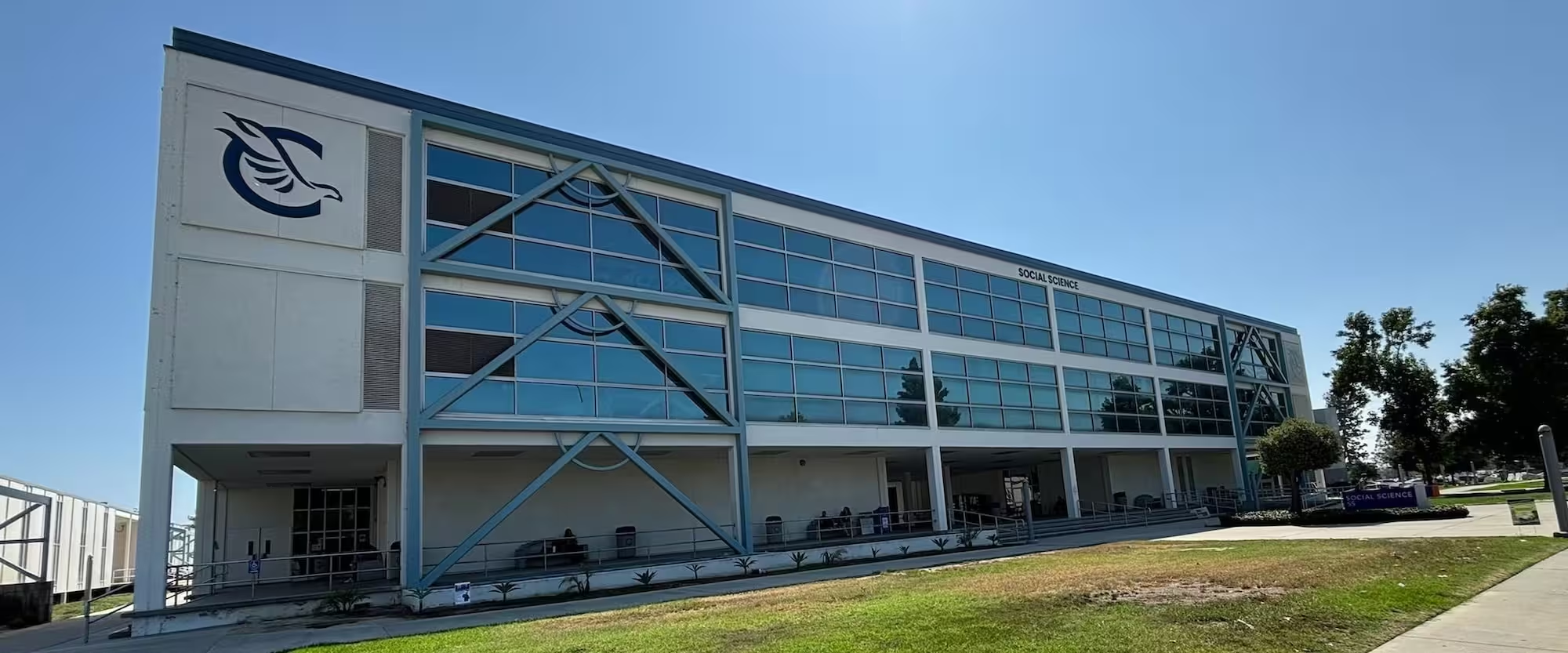
Onsite Locations
Choose online, hybrid, or in-person study at select campuses and learning centers.


How NU Supports Your Success
NU’s Whole Human Education™ provides flexible, supportive, and career-focused education for the way you live and learn.


Faculty Mentorship
Learn from experienced faculty with real-world industry insight.

Learning Resources
Access free tutoring and academic resources to support your success.

Transfer-Friendly Pathways
Apply prior college credit or professional experience to finish your degree faster.

Career Support
Strengthen your career potential with career counseling, professional development, and job search tools.

Take Your Expertise Further
Learn more about our career-focused programs and flexible options for working professionals.
Frequently Asked Questions
This program places a strong emphasis on developing proficiency in legal research and writing. Graduates will possess the industry-current knowledge and skills to pursue positions at law firms and in-house legal departments. Our ABA-approved curriculum also offers a strong foundation for students who plan to pursue a law degree. Students also have access to and become proficient in both Westlaw and Lexis, the industry leaders for legal research platforms and tools. Most paralegal programs only offer students access to one or the other.
Paralegal professionals are in demand in today’s workforce. This may include titles such as:
- Litigation paralegals
- Legal assistants
- Paralegal specialists
- Law clerks
The most prevalent career paths in general are:
- Paralegals and legal assistants
- Legal support workers
- Compliance officers
Today’s paralegals often perform a variety of tasks once performed by entry-level lawyers. The increased demand for these highly trained professionals has elevated their median wage to $61,010, according to the Bureau of Labor Statistics.
The BS in Paralegal Studies prepares you to perform a variety of responsibilities at law firms or in-house legal departments. Our curriculum is approved by the American Bar Association, meaning your future employers will recognize your proficiency to, among other things:
- Conduct legal research using both Westlaw and Lexis platforms
- Manage the office operations of law firms and in-house legal departments
- Assist attorneys in the drafting of legal documents
- Perform administrative duties specific to the needs of law office environments
- Analyze and review legal briefs and documents
Emsi Labor Analyst data suggests employers seeking paralegals include federal and state governments, insurance companies, management and CPA consulting/business services, law firms, and health systems.
In-person courses include on-ground, in-person course instruction and may have course information, work, or other education-related items delivered through online environments and tools.
Online courses include instruction that is fully virtual, comprised of regular and substantive interaction between students and their instructors in either an asynchronous or synchronous format.
Hybrid courses include both in-person and online instruction. Hybrid courses can have multiple deliveries of course instruction/materials and will have on-ground requirements at specific locations and times. The online learning management system is often used to present or supplement course lessons, work, information, and assessments.
Hear from Our Graduates
Working professionals who turn their degree into leadership impact.


I am creating a career and a life I’m proud of. Earning my degree symbolizes growth, resilience, and the start of a future I once couldn’t imagine for myself.
Lauren P.
Class of 2025

National University has a support system that wants to see you excel and be successful. From the advisors to your professors, they are on your team.
Gerald C.
Class of 2021

As a Navy Veteran, it means the world to have a school show the military and its Veterans so much respect and love for our time and service.
Kareece B.
Class of 2024
Program Disclosure
Successful completion and attainment of National University degrees do not lead to automatic or immediate licensure, employment, or certification in any state/country. The University cannot guarantee that any professional organization or business will accept a graduate’s application to sit for any certification, licensure, or related exam for the purpose of professional certification.
Program availability varies by state. Many disciplines, professions, and jobs require disclosure of an individual’s criminal history, and a variety of states require background checks to apply to, or be eligible for, certain certificates, registrations, and licenses. Existence of a criminal history may also subject an individual to denial of an initial application for a certificate, registration, or license and/or result in the revocation or suspension of an existing certificate, registration, or license. Requirements can vary by state, occupation, and/or licensing authority.
NU graduates will be subject to additional requirements on a program, certification/licensure, employment, and state-by-state basis that can include one or more of the following items: internships, practicum experience, additional coursework, exams, tests, drug testing, earning an additional degree, and/or other training/education requirements.
All prospective students are advised to review employment, certification, and/or licensure requirements in their state, and to contact the certification/licensing body of the state and/or country where they intend to obtain certification/licensure to verify that these courses/programs qualify in that state/country, prior to enrolling. Prospective students are also advised to regularly review the state’s/country’s policies and procedures relating to certification/licensure, as those policies are subject to change.
National University degrees do not guarantee employment or salary of any kind. Prospective students are strongly encouraged to review desired job positions to review degrees, education, and/or training required to apply for desired positions. Prospective students should monitor these positions as requirements, salary, and other relevant factors can change over time.