
TEACH ALL SUBJECTS TO K-6 STUDENTS
Bachelor of Arts in Early Childhood Development With an Inspired Teaching and Learning Preliminary Multiple-Subject Teaching Credential (California)
Accredited by

- Flexible options for working professionals
- Year-round enrollment
- No application fee, essays, or exams

Format
Online and onsite*

Completion Time
This program is designed to be completed within 48 months. However, students who pursue this program at an accelerated rate may be able to complete the program in as few as 31 months.
31 Months*

Credits
120

Average Cost Per Credit
$640
Program Overview
Why Get a Bachelor of Arts in Early Childhood Development With an Inspired Teaching and Learning Preliminary Multiple-Subject Teaching Credential (California)?
National University’s BA in Early Childhood Development is designed to help you inspire K-6 learners. The California Inspired Teaching and Learning Preliminary Multiple-Subject Teaching Credential provides a broad, rigorous education that prepares candidates for a career as a teacher at early elementary grades. The focus is on an enriched and thought-provoking curriculum incorporating content across subject areas, specific educational methodology courses, and preparation for professional work as multiple-subject teachers in elementary grades.

Flexible Online Learning Options

Career-Relevant Training

Experienced Faculty and Mentors

Year-Round Enrollment
Career Impact
Explore current career data, including projected job growth and earning potential.

*Data Source: The career outcomes data presented is sourced from Lightcast, which provides insights based on real-time job postings, public datasets, and analytics. Lightcast derives its data from sources such as the Bureau of Labor Statistics (BLS), the Quarterly Census of Employment and Wages (QCEW), and the Occupational Employment Statistics (OES). While accurate and reliable, this data reflects general labor market trends and may not represent individual outcomes or specific local conditions. For more details on Lightcast’s methodology, visit their Data Overview.
Professional Pathways
Preschool Teachers
73,658
Job openings in the past year$37,741
Median SalaryKindergarten Teachers
13,194
Job openings in the past year$62,618
Median Salary
*Data Source: The career outcomes data presented is sourced from Lightcast, which provides insights based on real-time job postings, public datasets, and analytics. Lightcast derives its data from sources such as the Bureau of Labor Statistics (BLS), the Quarterly Census of Employment and Wages (QCEW), and the Occupational Employment Statistics (OES). While accurate and reliable, this data reflects general labor market trends and may not represent individual outcomes or specific local conditions. For more details on Lightcast’s methodology, visit their Data Overview.
What You’ll Learn and Apply











Admission and Degree Requirements
How to Apply

Admission highlights:
- Transfer-friendly admission process
- Online application with personalized support
- Year-round enrollment opportunities
- Guidance from dedicated admissions advisors
Application requirements:
- Background check
- Proof of current DTAP, MMR, and Flu vaccinations
- Subject matter competency through a state-approved examination (CSET)
- Completed online application
- Official transcripts from previously attended institutions
- Proof of high school diploma or equivalent
- Personal statement or educational goals statement
- Resume or relevant academic background information
Credential admission requirements:
- Proof of fingerprint clearance through the CTC
- Negative tuberculosis (TB) results
- Subject Matter Competency attempt, registration, or passage
Degree Requirements

Requirements include:
- General education coursework (minimum 46 semester credit hours)
- Minimum 30 semester credit hours completed through NU
- 120 credit hours required for graduation
- Minimum 51 credit hours completed at the upper-division level
Additional information:
- Students must meet the basic skills and subject matter competency
- Students must successfully complete all foundation courses
- Students must maintain satisfactory academic progress
Credential Recommendation

Requirements include:
- Verification of Meeting U.S. Constitution requirement
- Multiple Subject only: Passage of Reading Instruction Competency Assessment (RICA)
- Possess a minimum of 3.0 GPA in Credential Coursework (D, F, and U grades are not accepted)
- Valid Adult, Child and Infant CPR
- Passage of CalTPA Cycles 1 and 2
Your credential recommendation request will be reviewed by National University Credential Technicians who process the application, confirm credential eligibility, and submit a recommendation to the state. You will receive an email notification to go online and pay for the credential. After payment is confirmed, you will receive e-mail confirmation from the CTC that your document has been granted. You can look up your credential document on the CTC website at: www.ctc.ca.gov
Explore Our Courses
Build advanced expertise in your field through career-relevant coursework.
Preparation for Major
4 COURSES
The Growing Child: Zero to 8
3.0 Semester Credit Hours
Overview of major and theoretical frameworks and perspectives. Focus on gender and cultural impact on biological, physical, cognitive, social, moral, emotional and behavioral aspects of development for effective educational practices.
Child, Family, School and Comm
3.0 Semester Credit Hours
Focus on the influence of family, school and community on development and education of the young child. Special emphasis on the role of nutrition, positive home and school environments and community resources.
Diversity: Development & Ed.
3.0 Semester Credit Hours
Focus on cultural pluralism and its impact on development and education in regards to teaching and learning strategies. Emphasis on self-examination, reflection, and integration of current processes involved in interactions and relationships in society.
Health, Nutrition and Safety
3.0 Semester Credit Hours
Focus on the eight components for coordinated health for young children in out-of-home care. Health, physical education, health and nutrition services, health promotion for the staff, counseling and psychological services, a safe healthy environment, and family involvement, and community resources and personnel will be addressed. Attention will be directed towards children with special needs and challenging behaviors as well as legal and ethical issues in the field of early childhood.
Early Childhood Education Core Requirements
9 COURSES
Ethical and Legal Issues
3.0 Semester Credit Hours
Focus on local, state and federal statutes and regulations in early education settings. Emphasis on ethical codes of conduct, including analysis of legal and ethical dilemmas and practice.
Early Cognition
3.0 Semester Credit Hours
Prerequisite: ECE 201; ECE 210; HED 220 and ECE 211
Inquiry into the nature and tasks of early cognition including social, cultural and biological foundations. Attention paid to current research implications for learning theory, individual differences and classroom instruction.
Early Language and Literacy
3.0 Semester Credit Hours
Prerequisite: ECE 330
Focus on acquisition and developmental aspects of language related to emergent literacy skills. Emphasis on current research regarding language experiences that contributes to literacy acquisitions, including assessment and instruction.
Designing Emergent Curriculum
3.0 Semester Credit Hours
Prerequisite: ECE 330
Focus on essential elements of curriculum design including writing of goals, learning outcomes, developmentally appropriate activities, assessment measures and integration of the arts. Alignment with national and state standards stressed.
Nature, Numbers and Technology
3.0 Semester Credit Hours
Prerequisite: ECE 330
Focus on identification, design and delivery of developmentally age appropriate experiences that encourage active math, science and technology inquiry. Inquiry related to emerging notions of mathematical and scientific processes is basis for activities along with the inclusion of technology as a strategy.
Play as Pedagogy
3.0 Semester Credit Hours
Prerequisite: ECE 330
Focus on play as the primary learning modality for young children. Theoretical basis for play as a means of teaching, role in learning and as a means of assessment emphasized.
Observing, Assessing & Plannin
3.0 Semester Credit Hours
Prerequisite: ECE 330
Focus on acquiring and enhancing skills in the selection, administration, scoring, interpretation, reporting of screening assessment instruments. Emphasis on designing and implementing curricula based on assessment results.
Children with Special Needs
3.0 Semester Credit Hours
Prerequisite: ECE 330
Exploration of variations in child development and identification of specific disabilities in young children. Inclusive early childhood programs, specific strategies for adaptation and accommodation of the core curriculum to meet the social, emotional, and academic needs of children who are at-risk or have special needs are examined.
Strategies: Guiding Behaviors
3.0 Semester Credit Hours
Prerequisite: ECE 330
Focus on observation, identification, description, and assessment of challenging behaviors. Designing and implementing effective teaching and learning strategies to successfully guide these behaviors within a social and cultural context.
Undergraduate Credential Inspired Teaching and Learning Preliminary Multiple Subject Teaching Credential
Degree Requirements: To receive the Multiple Subject Teaching Credential students must complete 14 courses, 39 semester credit hours
Introductory Core Requirement
1 COURSE
Becoming a Teacher
3.0 Semester Credit Hours
BA credential program requirements; K-12 school and classroom experiences; and observational skills in K-12 classrooms. Principles sustaining an inspired teacher mindset. Electronic showcase reflecting professional growth throughout the program. Grading is S, U or In Progress (IP).
Students must complete ITL 400 and Credential Packet prior to beginning ITL 402.
Foundation Courses
4 COURSES
Context: Education in the U.S.
3.0 Semester Credit Hours
Prerequisite: ITL 400 and Students must complete the credential packet.
Examines historical, socio-political, cultural, and economic influences, as well as technological and other innovations on the evolution of education in the U.S. and globally. Considers the impact of legal mandates and other influential factors on the profession; identifies necessary knowledge, skills, and dispositions of an inspired professional educator.
Learners and Learning I
3.0 Semester Credit Hours
Prerequisite: ITL 402
Examines psychological, socio-cultural, linguistic, and other factors influencing development, learning, and the full range of learners, including English Learners, standard-English learners, students with exceptionalities, and students with other needs. Considers a variety of data to identify appropriate strategies and community-based resources to support all learners and their families.
Learners and Learning II
3.0 Semester Credit Hours
Prerequisite: ITL 404
Examines theories and research regarding typical and atypical child and adolescent development and learning. Considers various data collection and assessment techniques which guide the selection of effective instructional strategies, practices, resources, and technologies to create environments that support the full range of learners and provide equitable access to the curriculum.
Design and Process of Teaching
3.0 Semester Credit Hours
Prerequisite: ITL 406
Candidates integrate principles of learning theories and factors influencing human development when designing instruction and evaluating instructional effectiveness. Candidates will utilize a four-stage cyclical model of planning, teaching, analyzing and reflecting in the process of learning-and-teaching to ensure all students equitable access to the curriculum.
Multiple Subject Credential Methods
5 COURSES
PRIOR to beginning any of the Multiple Subject Credential Area Method courses below, the candidate must successfully complete all Foundation courses, meet the Basic Skills and Subject Matter Competency, and meet any other related program requirements. This coursework will not transfer as graduate-level credit to National University or any other University as it is part of an undergraduate degree program. Grades earned in graduate-level courses will be calculated as part of the student’s undergraduate grade point average.
Language-Literacy: Foundations
3.0 Semester Credit Hours
Research-based theories, methods, and strategies aligned to K-12 CA’s Common Core Standards and ELA/ELD frameworks. Principles needed to teach foundational reading, writing, listening, speaking, and language for all learners, including English speakers, English learners, standard English learners, students with exceptionalities, and students with other learning needs.
Language/Literacy: Strategies
3.0 Semester Credit Hours
Prerequisite: ITL 510
Complex strategies for teaching reading, writing, listening, speaking, and language development. Research-based practices aligned to CA’s Common Core Standards and ELA/ELD frameworks. Language and literacy strategies for all learners, including English speakers, English learners, Standard English learners, students with exceptionalities, and students with other learning needs) in the K-8 classroom.
Mathematics Integrative Design
3.0 Semester Credit Hours
Prerequisite: ITL 512
Analysis of how elementary children think and learn mathematics. Research-based approaches enabling students to think critically and develop math proficiency. Developmentally appropriate instructional strategies for an integrative approach to teaching mathematics using content areas of visual and performing arts, social science, and STEM.
Science Integrative Design
3.0 Semester Credit Hours
Prerequisite: ITL 516
Candidates apply developmentally appropriate practices in designing an integrative approach to science instruction. Utilizes a variety research-based approaches supporting critical thinking and problem-solving skills. Analyzes how K-8 children learn science and other subject-matter utilizing an inquiry model. Integrates health science, physical education and STEM to support conceptual understanding and skills.
Optimized Learning Community
3.0 Semester Credit Hours
Research-based strategies and models managing an equitable and inclusive K-12 learning environments. Social-emotional growth, development, and individual responsibility. Positive interventions and supports, restorative justice, and conflict resolution practices. Prevention of common classroom problems. Effectively work with challenging students. Establishment of safe classroom and school environments to prevent bullying.
Student Teaching Requirements
4 COURSES
Core, Multiple Subject Credential Area Method, and upper division courses, meet the Basic Skills and Subject Matter Competency, and submit a complete student teaching application. The student teaching application process must be completed at least three-months prior to the candidate’s intended start of student teaching. Student teaching placements in K12 classrooms are made through a collaborative partnership of the university and respective school district. The student teaching placements must align to the subject matter credential sought. Student teaching is unpaid and composed of at least 600 instructional hours (16-18 weeks of full-time student teaching) in designated K12 classrooms. Note: The two seminar courses, below, ITL 551A and ITL 551B, are 1.50 semester credit hours each and will be taken concurrently with ITL 550A and ITL 550B, respectively.
Student Teaching A
3.0 Semester Credit Hours
Corequisite: ITL 551A
First half (8-9 weeks) of student teaching experience. Establishment of 300 of 600 total hours. Clinical practice placement in a district-university approved California K-12 classroom corresponding to the designated CSET area. Six Teaching Performance Experience (TPE) domains composed of 45 new TPE elements. Grading is S, U or In Progress (IP).
Student Teacher Seminar A
3.0 Semester Credit Hours
Corequisite: ITL 550A
Seminar concurrently taken with ITL 550A, Student Teaching A. Six Teaching Performance Expectation (TPEs) domains composed of 45 TPE elements. CalTPA Cycle 1. Grading is S, U or In Progress (IP).
Student Teaching B
3.0 Semester Credit Hours
Corequisite: ITL 551B
Prerequisite: ITL 550A
Second half (8-9 weeks) of student teaching experience. Establishment of 300 of 600 total hours. Clinical practice placement in a district-university approved California K-12 classroom corresponding to the designated CSET area. Six Teaching Performance Experience (TPE) domains composed of 45 new TPE elements. Grading is S, U or In Progress (IP).
Student Teacher Seminar B
3.0 Semester Credit Hours
Corequisite: ITL 550B
Prerequisite: ITL 551A
Seminar concurrently taken with ITL 550B, Student Teaching B. Six Teaching Performance Expectation (TPEs) domains composed of 45 TPE elements. CalTPA Cycle 2.
Trusted and
Accredited

The Western Association of Schools and Colleges (WASC) accredits public and private schools, colleges, and universities in the U.S.
AAQEP is a national accrediting body focused on improving the quality and effectiveness of educator preparation programs.
Financial Aid and Scholarships
Discover how scholarships, financial aid, transfer credit, and other tuition resources can help make your NU degree possible.

Get Financial Aid Through
the FAFSA
The Free Application for Federal Student Aid (FAFSA) helps determine your eligibility for federal student aid and other financial assistance. It’s an important first step in exploring your financial aid options at NU.
- Apply once each year to be considered for federal
financial aid - Explore loans, work-study, and other financial aid opportunities

Make Previous Coursework Count
Eligible coursework from an accredited institution may transfer toward your NU degree, depending on your program and the courses completed.
- See whether previous coursework may apply to your program
- Submit official transcripts for transfer credit evaluation
- Speak with an advisor about program-specific transfer limits

Millions in Scholarships
National University offers scholarships and grants that can help eligible students reduce the cost of earning a degree. Opportunities are available based on financial need, military affiliation, and other eligibility criteria.
- Scholarships for eligible bachelor’s students
- Need-based scholarship opportunities
- Scholarships for eligible Veterans and military families

Put Other Funding Sources to Work
Depending on your eligibility, you may be able to use employer tuition benefits, military education benefits, or other funding sources toward your NU education.
- Use eligible employer tuition assistance or education benefits
- Explore military Tuition Assistance and GI Bill® benefits
- Ask about additional funding options that may be available to you
Make the Most of Your
Prior Learning
Your professional training, certifications, military experience, or other prior learning may qualify for credit or course waivers, depending on your program.
- Explore eligible professional training and credentials
- Find out whether your experience aligns with NU coursework
- Work with an advisor to understand your options

How NU Supports Your Success
NU’s Whole Human Education™ provides flexible, supportive, and career-focused education for the way you live and learn.
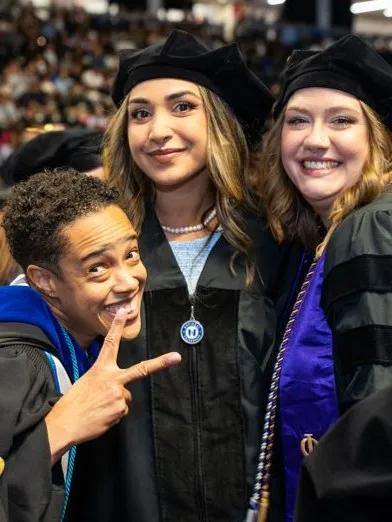

Faculty Mentorship
Learn from experienced faculty with real-world industry insight.

Learning Resources
Access free tutoring and academic resources to support your success.

Transfer-Friendly Pathways
Apply prior college credit or professional experience to finish your degree faster.

Career Support
Strengthen your career potential with career counseling, professional development, and job search tools.

Take Your Expertise Further
Learn more about our career-focused programs and flexible options for working professionals.
Frequently Asked Questions
Yes! This program lets you earn both your Bachelor of Arts in Early Childhood Development and your California Multiple-Subject Teaching Credential at the same time. Instead of finishing your degree first and then going back for your credential, you do both together. This saves you time and money. You’ll study child development, learning theory, and teaching methods all in one program. Most students finish everything in about 43 months if they’re starting fresh, or faster if they transfer in credits from another college.
With this credential, you can teach all subjects in elementary school classrooms, from kindergarten through sixth grade (K-6). This is different from a Single-Subject Credential, which only lets you teach one subject like English or math. As a multiple-subject teacher, you’ll teach everything — reading, math, science, social studies, and more — to the same group of students. The program is especially focused on early elementary grades, so you’ll be well-prepared to work with young learners in kindergarten through third grade.
Early childhood development (this program) focuses on understanding how young children grow, learn, and develop. You’ll study child psychology, development stages, and learning theory. Early childhood education programs focus more on teaching in preschool or childcare settings. This program combines child development knowledge with elementary teaching preparation, so you’ll be ready to teach K-6 classrooms in public schools. If you want to be an elementary school teacher, this early childhood development program with the multiple-subject Credential is designed to help get you there.
Hear from Our Graduates
Working professionals who turn their degree into leadership impact.


Everyone, from professors and advisors to tutors and enrollment specialists, has been extremely supportive and there to help in any way they can. I have utilized the Writing Center and the support of professors many times. National University has made it easy to return to college in my 40s.
Michelle P.
Class of 2025
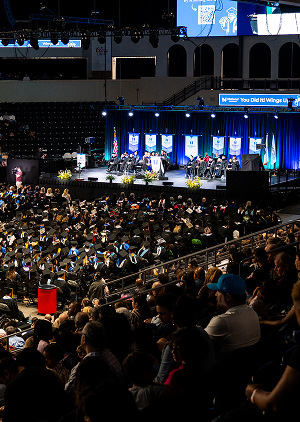
Being a first-generation college student, the idea of obtaining a bachelor’s degree seemed scary and unrealistic to me. Now, I have earned two associate degrees and am six classes away from earning my bachelor’s degree. I will have proven to myself that I am worthy and capable of being educated and going after my dreams.
Lisa A.
Class of 2022

National University has a support system that wants to see you excel and be successful. From the advisors to your professors, they are on your team.
Gerald C.
Class of 2021
Program Disclosure
Successful completion and attainment of National University degrees do not lead to automatic or immediate licensure, employment, or certification in any state/country. The University cannot guarantee that any professional organization or business will accept a graduate’s application to sit for any certification, licensure, or related exam for the purpose of professional certification.
Program availability varies by state. Many disciplines, professions, and jobs require disclosure of an individual’s criminal history, and a variety of states require background checks to apply to, or be eligible for, certain certificates, registrations, and licenses. Existence of a criminal history may also subject an individual to denial of an initial application for a certificate, registration, or license and/or result in the revocation or suspension of an existing certificate, registration, or license. Requirements can vary by state, occupation, and/or licensing authority.
NU graduates will be subject to additional requirements on a program, certification/licensure, employment, and state-by-state basis that can include one or more of the following items: internships, practicum experience, additional coursework, exams, tests, drug testing, earning an additional degree, and/or other training/education requirements.
All prospective students are advised to review employment, certification, and/or licensure requirements in their state, and to contact the certification/licensing body of the state and/or country where they intend to obtain certification/licensure to verify that these courses/programs qualify in that state/country, prior to enrolling. Prospective students are also advised to regularly review the state’s/country’s policies and procedures relating to certification/licensure, as those policies are subject to change.
National University degrees do not guarantee employment or salary of any kind. Prospective students are strongly encouraged to review desired job positions to review degrees, education, and/or training required to apply for desired positions. Prospective students should monitor these positions as requirements, salary, and other relevant factors can change over time.