
Will Military Service Help Me Get into College?
Plus Other Common Questions for Veterans Considering College
In short, yes, military experience can be an asset to college applicants. Regardless of which branch you have served, your military background can help to distinguish and strengthen your application. In fact, not only can military experience help you get into college, it may also allow you to graduate faster.
That said, it’s important to choose a university with the programs and student resources to help you succeed. For example, you may want to prioritize military-friendly colleges. While these colleges may offer the same accreditation, same range of degree programs, and same challenging coursework as traditional universities, they also place a greater emphasis on supporting and enrolling Veterans.
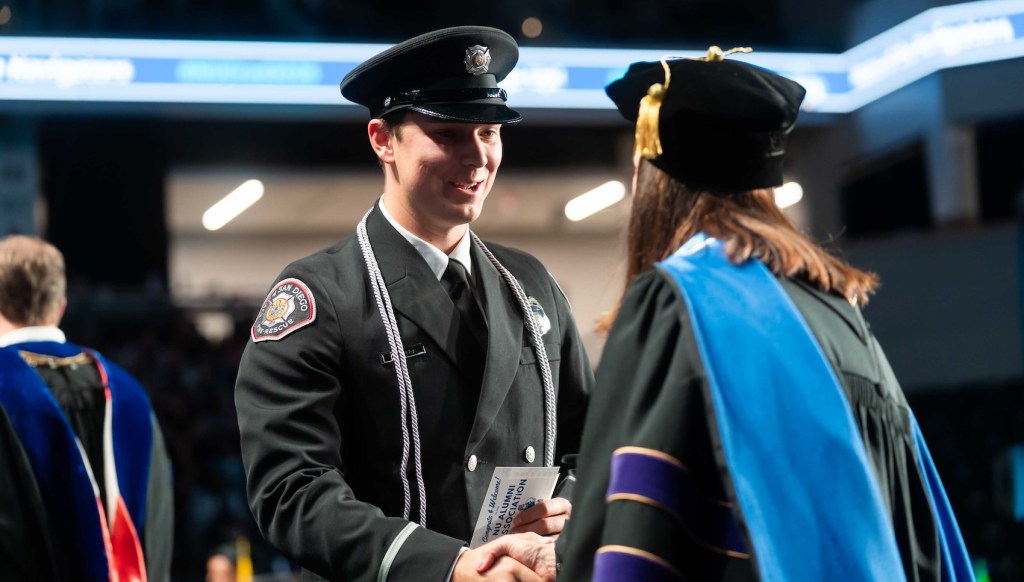
Consequently, military service is more likely to benefit you on a military-friendly college application than on a traditional college application. It’s also more likely to translate to course credit, which means you can finish your degree sooner. Consequently, military service is more likely to benefit you on a military-friendly college application than on a traditional college application. It’s also more likely to translate to course credit, which means you can finish your degree sooner.
This guide will explain how by covering some frequently asked questions about acceptance rates, college credits, ACT/SAT scores, military scholarships, financial aid for Veterans, transitioning into civilian life, and more.
How Many Veterans Go to College?
In 2025, the U.S. Bureau of Labor Statistics (BLS) reported that, on average, about 18.6 percent of Veterans had a bachelor’s degree, compared to 19.9 percent of non-Veterans. As of 2023, the Postsecondary National Policy Institute reported that the number had increased to almost one third of all U.S. military Veterans age 25 or older had earned a bachelor’s degree or higher.
Does Military Service Help Get into College?
Military service demonstrates teamwork, problem-solving, work ethic, and responsibility. It can also equip you with specialized knowledge or skills, depending on your training and area of expertise. These are factors that can help your essay or other college application materials stand out, no matter where you apply.
However, a military background may not always translate into financial aid or course credit, unless you choose a military-friendly college. To give yourself the best possible odds of being accepted for enrollment and receiving credit for your service. Consider applying to one or more military-friendly schools in addition to the traditional colleges on your list.
What is the Veterans College Acceptance Rate at NU?
Some universities have lower acceptance rates than others, with certain schools accepting only four to five percent of applicants. Combined with potentially costly admissions fees, some students may feel discouraged from applying. But with a higher percent acceptance rate, National University makes higher education accessible for all U.S. military Veterans.
To apply to National University or to request additional information about our accredited degree and credential programs, contact our military admissions office. A military enrollment officer can guide you through our admissions requirements, answer questions about financial aid and scholarships, and work with you to ensure that you earn credit for your service.
Can I Get College Credit for Serving in the Military?
Whether you can get college credit for serving in the military depends on where you enroll. Many institutions of higher learning offer military transfer credit for experience in the service, working with the American Council on Education (ACE) and Department of Defense (DoD). Individual institutions work with these governing bodies to evaluate military experience and how they may correspond with certain courses.
At National University, we work with military students to make sure they receive the maximum possible credit for their service or training, following ACE and DoD recommendations to ensure that military experience is accurately translated into course credit. This eliminates the need to spend time or money relearning skills you already possess, so that you can progress more efficiently toward graduating.
To learn more about credit requirements at National University, browse our military student resources and FAQs.
Do Veterans Need to Take the SAT or ACT?
Again, the answer to this question depends on the colleges or universities you plan to apply to. Many, though not all, colleges and universities require prospective students to submit ACT or SAT scores as part of their application process.
If you wish to take the ACT or SAT, you should know that the DoD operates a program called the Defense Activity for Non-Traditional Education Support, or DANTES, which provides Veterans with free online test prep and college prep materials, in addition to other programs and services that help Veterans earn their degrees or credentials. For example, as the program’s website explains, “DANTES sponsors CLEP and DSST exams,” which refers to the College Level Examination Program (CLEP) and DANTES Subject Standardized Tests (DSST). As our undergraduate admissions checklist points out, CLEP and other DANTES exams count toward your education experience, along with your military service and training.
Does NU Admissions Require SAT/ACT Scores?
National University does not specifically require ACT/SAT scores for military applicants. However, certain incoming students may need to take the ACCUPLACER or Write Placer exam, which assesses math and English skills. Incoming undergraduates must generally also have a minimum GPA of 2.0, with some exceptions.
For graduate student applicants, the minimum GPA requirement is higher: generally, 2.5. However, if the applicant’s GPA ranges from 2.0 to 2.49, he or she can potentially enroll after taking exams like the GMAT or GRE. Discover the complete list of graduate admissions requirements.
How Does National University Help Students Make the Military-to-College Transition Successfully?
National University offers a range of resources to help military students adjust to civilian life as a college student. At our Veteran Center in San Diego, our peer mentors offer Veteran-to-Veteran guidance and support, while our Virtual Veteran Center conveniently connects students through an online community 24/7. The National University Veterans Affairs (VA) Office provides additional support by helping students apply for and utilize VA benefits, which you can learn more about here.
NU also provides a range of scholarships, discounts, and financial aid resources to reduce the cost of tuition. For example, we are a Yellow Ribbon school that proudly accepts the Post 9/11 GI Bill. Additionally, we offer many of our accredited degree programs online, giving military students the flexibility to plan coursework around their busy schedules.
What Are Some Helpful Resources for Student Veterans and Military Families?
If you’re looking for additional resources to help you prepare for college and earn your degree, here are some suggestions to help you get started:
- To apply for VA education benefits
- Browse student services at NU
- Contact a DANTES military education counselor
- Explore these non-VA resources for student Veterans
- Find out if you qualify for NU’s Veterans’ Victory Scholarship
- Get involved with Student Veterans of America (SVA)
- Reach out to admissions for military Veterans at National University
- Read this guide to federal aid for military students to help pay for college
- Use the VA College Toolkit
Additional Sources
- Tips for Going to College as a Military Veteran | Best Colleges | U.S. News
- 4 Things Veterans Choosing an Online Degree Program Should Consider | Online Colleges | U.S. News
- Veterans in Higher Education – Fact Sheet
- The American Council on Education (ACE’s) Military Evaluations program
- National University Veteran Center
- National University Veterans Affairs
- Student Veteran Program Resources
- American Council on Education – Wikipedia


