
A FUTURE BUILT TO LAST
Bachelor of Science in Construction Management
Accredited by

- Flexible options for working professionals
- Four-week online courses that fit your schedule
- No application fee, essays, or exams

Format
Online and Hybrid

Completion Time
This program is designed to be completed within 48 months. However, students who pursue this program at an accelerated rate may be able to complete the program in as few as 24 months.
24 Months*

Credits
125

Average Cost Per Credit
$640
Program Overview
Why Get a Bachelor of Science in Construction Management?
Lay the foundation for a career in construction management with National University’s Bachelor of Science in Construction Management (BSCM). Developed with guidance from construction industry leaders, the program combines technical coursework in cost engineering, modern surveying methods, and building systems with business, communication, and management skills. You’ll learn to solve construction challenges, collaborate across multidisciplinary teams, and manage construction projects from planning and scheduling to execution.

Flexible Online Learning Options

Career-Relevant Training

Experienced Faculty and Mentors

Year-Round Enrollment
Career Impact
Explore current career data, including projected job growth and earning potential.

*Data Source: The career outcomes data presented is sourced from Lightcast, which provides insights based on real-time job postings, public datasets, and analytics. Lightcast derives its data from sources such as the Bureau of Labor Statistics (BLS), the Quarterly Census of Employment and Wages (QCEW), and the Occupational Employment Statistics (OES). While accurate and reliable, this data reflects general labor market trends and may not represent individual outcomes or specific local conditions. For more details on Lightcast’s methodology, visit their Data Overview.
Professional Pathways
General and Operations Managers
338,415
Job openings in the past year$105,324
Median SalaryConstruction Managers
58,220
Job openings in the past year$90,605
Median Salary
*Data Source: The career outcomes data presented is sourced from Lightcast, which provides insights based on real-time job postings, public datasets, and analytics. Lightcast derives its data from sources such as the Bureau of Labor Statistics (BLS), the Quarterly Census of Employment and Wages (QCEW), and the Occupational Employment Statistics (OES). While accurate and reliable, this data reflects general labor market trends and may not represent individual outcomes or specific local conditions. For more details on Lightcast’s methodology, visit their Data Overview.
What You’ll Learn and Apply






Admission and Degree Requirements
How to Apply

Admission highlights:
- Transfer-friendly admission process
- Flexible monthly start dates
- Online application with personalized support
- Year-round enrollment opportunities
- Guidance from dedicated admissions advisors
Application requirements:
- Completed online application
- Official transcripts from previously attended institutions
- Proof of high school diploma or equivalent
- Personal statement or educational goals statement
- Resume or relevant academic background information
Degree Requirements

Requirements include:
- General education coursework (minimum 46 semester credit hours)
- Minimum 30 semester credit hours completed through NU
- 125 credit hours required for graduation
- Minimum 51 credit hours completed at the upper-division level
Additional information:
- Maintain satisfactory academic progress
- Complete all required BSCM coursework, including senior project courses
- Participate in collaborative and project-based learning experiences
- Demonstrate critical planning, inspection, and structural analysis skills

Explore Our Courses
Build advanced expertise in your field through career-relevant coursework.
Preparation for the Major
10 COURSES
Public Speaking
3.0 Semester Credit Hours
This class is an introduction to the principles and application of speaking effectively to diverse audiences in a variety of settings. Focus is on topic selection, organization, analysis of research, and delivery, with special attention on learning effective delivery skills.
College Algebra & Trigonometry
3.0 Semester Credit Hours
Prerequisite: MTH 12A and MTH 12B or Accuplacer test placement evaluation
Examines higher degree polynomials, rational, exponential and logarithmic functions, trigonometry and matrix algebra needed for more specialized study in mathematics, computer science, engineering and other related fields. Computer and/or graphing calculator use is highly recommended.
Introductory Physics
3.0 Semester Credit Hours
Prerequisite: MTH 204 or MTH 215
Non-calculus based general physics course for earth and life science majors. Study of force, laws of motion, heat, fluid mechanics, electricity, magnetism, light (optics) and modern physics.
Introductory Physics Lab
1.0 Semester Credit Hours
Prerequisite: PHS 104 or PHS 171 for Science Majors
Non-calculus based general physics lab course for earth and life science majors. Laboratory experiments and exercises will include data analysis and evaluations of measurement. Topics include, but are not limited to, the following: force, gravity, laws of motion, fluid mechanics, electricity, and light (optics).
Academic Information Literacy
3.0 Semester Credit Hours
Prerequisite: ENG 102
Focuses on the role of informatics in contemporary health care. Wireless and mobile computing, maintaining data integrity, information security and confidentiality and HIPAA, telehealth, and electronic health records (EHR) will be explored.
Engineering Mathematics
3.0 Semester Credit Hours
Prerequisite: MTH 215
An examination of the major mathematical tools for engineers and scientists.
Intro to Graphics and Auto CAD
3.0 Semester Credit Hours
Prerequisite: MTH 215
Introduction to the latest version of AutoCAD software for two- and three-dimensional modeling, engineering graphics, and technical drawings.
Financial Accounting Fundamentals
3.0 Semester Credit Hours
A survey of basic accounting theory and the application of accounting principles, this course includes the recording and summarization of business transactions in the form of financial statements under the rules of generally accepted accounting principles. (GAAP). It is designed for students who have little or no prior knowledge of financial accounting, this course corresponds to Principles of Accounting I at other colleges.
Principal of Management & Organizations
3.0 Semester Credit Hours
Introduction to the roles of managers and the vision, mission and goals of organizations. Investigates management theories and explores the four primary functions of managers: Planning, Organizing, Leading and Controlling. Covers issues related to human resource management, organizational structure and behavior, creative problem solving, effective communication, and the management of teams, change and innovations.
Applied Probability & Statistics
3.0 Semester Credit Hours
Prerequisite: CSC 208 or MTH 220 or CEN 220
Introduction to the theory and applications of probability and statistics. Topics include data and numerical summary measures, fundamental concepts of probability, conditional probability, random variables, common distributions, quality and reliability and statistical inference (estimation, hypothesis testing, and regression). The emphasis is on developing problem solving skills and application to business, social sciences and engineering.
Requirements for the Major
19 COURSES
Statics & Strength of Material
3.0 Semester Credit Hours
Prerequisite: CEN 220
Introduction to the key topics in strength of materials with focus on applications, problem solving and design of structural members, mechanical devices, and engineering systems.
Engineering Economics
3.0 Semester Credit Hours
Prerequisite: MTH 215
Economic analysis for decision-making with an emphasis on rate of return, net present value, benefit-cost, and multi-objective evaluation methods. Cost estimation and alternative analysis.
Scientific Problem Solving
3.0 Semester Credit Hours
Prerequisite: CSC 208 or CEN 220
The scientific approach to problem solving through analysis and design are presented using modern computer science and engineering examples. Critical thinking and communication skills will be used to interpret and present results from real-world case studies where computers were used to solve scientific problems.
Scientific Problem Solving-LAB
1.0 Semester Credit Hours
Prerequisite: DEN 320
Using hands-on computer tools, the scientific approach to problem solving through analysis and design is applied in this laboratory course. Results from these hands-on activities will be interpreted and presented both on an individual basis and in a team environment. Critical thinking and communication skills will be used to interpret and present results of scientific investigations.
Legal&Ethicl Const/Engr Issues
3.0 Semester Credit Hours
Prerequisite: MTH 215
Course focuses on basic principles and new developments in the legal aspects of architectural, engineering and construction processes. Coverage includes contractor licensing, professional design services, liability, intellectual property, and competitive bidding.
Surveying, Metrics and GIS
3.0 Semester Credit Hours
Prerequisite: DEN 219
Land and topographic surveying with global position systems and geographic information systems (GIS). Fundamentals of distance, leveling angles, theodolites, transverse surveys and computations. Hands-on with ArcView GIS to understand the basic GIS concepts and applications in land planning.
Computer Aided Engineering I
3.0 Semester Credit Hours
Prerequisite: DEN 219
Introduction to simulation modeling and analysis, model development, intermediate and detailed modeling, modeling issues and techniques.
Structural Analysis
3.0 Semester Credit Hours
Prerequisite: CEN 220 and DEN 225
Introduction to analysis of wood, steel and concrete structures. Basic structural loads, forces and moments in beams, columns and trussed systems. Internal reactions and method of sections. Stress, sheer and deformation in beams and columns. Basic design fundamentals.
Soil Mechanics and Foundation
3.0 Semester Credit Hours
Prerequisite: CEN 323
An introduction to soil mechanics and foundation engineering. The course teaches the students how to solve certain fundamental problems related to consolidation, shear strength, and design of shallow and deep foundations; and familiarizes students with relevant terms and soil tests so that they can work effectively with geotechnical engineering specialists. The course features soil basics, including their derivation, identification and classification. The principles of water flow in soils, settlement and heave, and shear strength of soils will be discussed. Consolidation problems, factors of safety for foundations, and foundation settlement prediction will also be covered.
Constr Materials and Methods
3.0 Semester Credit Hours
Prerequisite: MTH 215
An overview of the basic materials and methods utilized in construction projects. Wood, steel, masonry, glass, and concrete and other material are introduced along with their associated construction systems in foundations, framing, cladding, windows, doors, finishes and roofing.
Plans and Specifications
3.0 Semester Credit Hours
Prerequisite: DEN 219
Drawing and interpretation of plans, sections, details, symbols, notes and details in architectural, construction and shop drawings. Coordination and reference between drawings. Specification creation incorporating material properties, construction techniques and legal factors. Industry standards from AIA and CSI are presented.
Mech and Electrical Systems
3.0 Semester Credit Hours
Prerequisite: MTH 215
The impact of M/E systems on the design and construction process including energy considerations. Fundamentals of HVAC, plumbing, fire protection, electrical distribution, lighting, information systems, and vibrations in the building system.
Est., Scheduling and Control
3.0 Semester Credit Hours
Prerequisite: CEN 410
An introduction to the fundamentals of construction management, estimating, scheduling and control. Quantity takeoff estimations for material, time, equipment and overhead are presented. Activity durations, scheduling and project updating for control are covered.
Project Management Fundamental
3.0 Semester Credit Hours
This course focuses on project management concepts and definitions, network scheduling techniques, strategic planning, risk management, cost control, and project implementation.
Est., Scheduling & Control II
3.0 Semester Credit Hours
Prerequisite: CEN 419
An advanced course built on the fundamentals of construction management, estimating, scheduling and control introduced in CEN 419. Topics concerning quantity takeoff estimations for material, time, equipment, overhead, critical path, and precedence networks for activity durations, scheduling, and project updating for control are presented.
Constr, Acct, Finance and Law
3.0 Semester Credit Hours
Prerequisite: ACC 201
Application of business accounting and financial principles to the construction industry. Construction accounting systems, depreciation and financial analysis are introduced. Labor, overhead, and profit management are presented. Cash flow, time value of money, and legal aspects specific to construction industry contracts are introduced.
Field Inspection and Safety
3.0 Semester Credit Hours
Prerequisite: CEN 410
Integration of safety and productivity into daily field operations through inspection and accountability. Examines accident costs and contributing factors and techniques for risk minimization. Presents the relationship between safety and quality and techniques for site, structure, general and mechanical and electrical system inspections.
Design & Const Process Integra
3.0 Semester Credit Hours
An introduction to the detailed processes of construction management and the relevant tools, processes and techniques that are involved. Students will be developing skills and knowledge to integrate and manage the overall construction process including the project proposal and design, cost estimate, contract document drawings and specifications, construction schedule, and project presentation.
Sustainable Construction
3.0 Semester Credit Hours
An introduction to the basic principles of sustainability as it applies to construction. Sustainability encompasses the 3Es of economics, environment and equity. Sustainable construction is examined in all stages of a building life-cycle from design to commissioning and beyond. This course provides both broad knowledge of sustainable construction techniques and uses in-depth design tools for integrating sustainable principles into modern construction management processes.
Construction Senior Project
3 COURSES
Construction Senior Project I
3.0 Semester Credit Hours
Prerequisite: Completion of 10 core courses in construction program.
A team capstone project that demonstrates a synthesis of learning accumulated in the construction program. This is the first part of a three-part sequence. Students will form teams and begin research leading to a senior project proposal.
Construction Senior Project II
3.0 Semester Credit Hours
Prerequisite: CEN 486A
A team capstone project that demonstrates a synthesis of learning accumulated in the construction program. This is the second part of a three-part sequence. Students begin to implement the project that was proposed in CEN 486A.
Construction Senior Project III
3.0 Semester Credit Hours
Prerequisite: CEN 486B
A team capstone project that demonstrates a synthesis of learning accumulated in the construction program. This is the third part of a three-part sequence. Students finalize the project that was proposed in CEN 486A and CEN 486B.
Trusted and
Accredited

The Western Association of Schools and Colleges (WASC) accredits public and private schools, colleges, and universities in the U.S.
Financial Aid and Scholarships
Discover how scholarships, financial aid, transfer credit, and other tuition resources can help make your NU degree possible.

Get Financial Aid Through
the FAFSA
The Free Application for Federal Student Aid (FAFSA) helps determine your eligibility for federal student aid and other financial assistance. It’s an important first step in exploring your financial aid options at NU.
- Apply once each year to be considered for federal
financial aid - Explore loans, work-study, and other financial aid opportunities

Make Previous Coursework Count
Eligible coursework from an accredited institution may transfer toward your NU degree, depending on your program and the courses completed.
- See whether previous coursework may apply to your program
- Submit official transcripts for transfer credit evaluation
- Speak with an advisor about program-specific transfer limits

Millions in Scholarships
National University offers scholarships and grants that can help eligible students reduce the cost of earning a degree. Opportunities are available based on financial need, military affiliation, and other eligibility criteria.
- Scholarships for eligible bachelor’s students
- Need-based scholarship opportunities
- Scholarships for eligible Veterans and military families

Put Other Funding Sources to Work
Depending on your eligibility, you may be able to use employer tuition benefits, military education benefits, or other funding sources toward your NU education.
- Use eligible employer tuition assistance or education benefits
- Explore military Tuition Assistance and GI Bill® benefits
- Ask about additional funding options that may be available to you
Make the Most of Your
Prior Learning
Your professional training, certifications, military experience, or other prior learning may qualify for credit or course waivers, depending on your program.
- Explore eligible professional training and credentials
- Find out whether your experience aligns with NU coursework
- Work with an advisor to understand your options

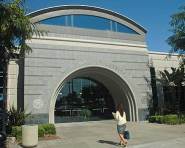
Onsite Locations
Choose online, hybrid, or in-person study at select campuses and learning centers.

How NU Supports Your Success
NU’s Whole Human Education™ provides flexible, supportive, and career-focused education for the way you live and learn.


Faculty Mentorship
Learn from experienced faculty with real-world industry insight.

Learning Resources
Access free tutoring and academic resources to support your success.

Transfer-Friendly Pathways
Apply prior college credit or professional experience to finish your degree faster.

Career Support
Strengthen your career potential with career counseling, professional development, and job search tools.

Take Your Expertise Further
Learn more about our career-focused programs and flexible options for working professionals.
Frequently Asked Questions
NU’s BSCM develops skills in planning, budgeting, scheduling, and managing construction projects. You’ll study construction materials and methods, estimating, safety and inspection, building systems, project management, and construction finance and law while developing the technical and communication skills needed to work across multidisciplinary teams.
A construction management degree can prepare you to pursue roles such as construction manager, project engineer, construction superintendent, field engineer, estimator, scheduler, and other positions across the construction industry.
NU lists an average completion time of 40 months. Your individual timeline may vary depending on factors such as transfer credits, course load, and enrollment schedule.
NU’s BSCM is offered through online and hybrid learning options, with some courses also available on campus. Program format and availability may vary by course and location.
Yes. National University welcomes transfer students, and eligible prior college credits may apply toward the BSCM’s 125-semester-credit requirements. An admissions advisor can help determine how your previous credits may apply.
NU’s BSCM combines flexible learning with an industry-informed curriculum covering technical construction fundamentals, project management, business, law, and engineering concepts. Students also gain applied experience through technical learning and a three-part collaborative senior project.
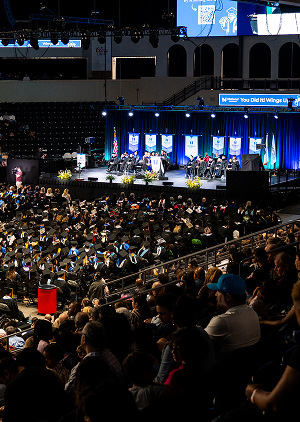
Hear from Our Graduates
Working professionals who turn their degree into leadership impact.


National University has a support system that wants to see you excel and be successful. I wouldn’t be where I am now without the support at NU.
Gerald C.
Class of 2021
NU had a great writing center and math center that assisted many students with free tutoring.
Karen C.
Class of 2023

As a Navy Veteran, it means the world to have a school show the military and its Veterans so much respect and love for our time and service.
Kareece B.
Class of 2024
Program Disclosure
Successful completion and attainment of National University degrees do not lead to automatic or immediate licensure, employment, or certification in any state/country. The University cannot guarantee that any professional organization or business will accept a graduate’s application to sit for any certification, licensure, or related exam for the purpose of professional certification.
Program availability varies by state. Many disciplines, professions, and jobs require disclosure of an individual’s criminal history, and a variety of states require background checks to apply to, or be eligible for, certain certificates, registrations, and licenses. Existence of a criminal history may also subject an individual to denial of an initial application for a certificate, registration, or license and/or result in the revocation or suspension of an existing certificate, registration, or license. Requirements can vary by state, occupation, and/or licensing authority.
NU graduates will be subject to additional requirements on a program, certification/licensure, employment, and state-by-state basis that can include one or more of the following items: internships, practicum experience, additional coursework, exams, tests, drug testing, earning an additional degree, and/or other training/education requirements.
All prospective students are advised to review employment, certification, and/or licensure requirements in their state, and to contact the certification/licensing body of the state and/or country where they intend to obtain certification/licensure to verify that these courses/programs qualify in that state/country, prior to enrolling. Prospective students are also advised to regularly review the state’s/country’s policies and procedures relating to certification/licensure, as those policies are subject to change.
National University degrees do not guarantee employment or salary of any kind. Prospective students are strongly encouraged to review desired job positions to review degrees, education, and/or training required to apply for desired positions. Prospective students should monitor these positions as requirements, salary, and other relevant factors can change over time.