
Mental health and addiction disorders continue to rise across the United States, affecting Veterans, adolescents, families, first responders, and entire communities. According to the National Institute on Drug Abuse, nearly half of individuals with a substance use disorder also experience a co-occurring mental health condition. At the same time, healthcare systems are struggling with workforce shortages, rising treatment costs, and inconsistent long-term recovery outcomes.
As the behavioral health field evolves, many professionals are asking an important question: What if we could move beyond symptom management and directly support healthier brain functioning itself?
This is where automated neurofeedback enters the conversation. Automated neurofeedback is an emerging neurotechnology that uses real-time brainwave information to help the brain self-regulate and optimize functioning. Within National University’s Alcohol and Drug Counseling certificate program, students are introduced to a neuro-centric perspective that integrates neuroscience, psychophysiology, trauma-informed care, and evidence-based addiction counseling competencies into modern behavioral health practice.
In this article, readers will learn what automated neurofeedback is, why brain-based approaches are gaining attention in addiction treatment, and how future counselors can prepare for the next evolution of mental health care
What Is Automated Neurofeedback?
Automated neurofeedback is a form of brain training that uses electroencephalography (EEG) technology to monitor brainwave activity and provide feedback to the brain in real time. Unlike traditional talk therapy, which focuses primarily on thoughts and behaviors, neurofeedback targets patterns of brain dysregulation that may contribute to symptoms such as anxiety, depression, trauma responses, impulsivity, insomnia, and substance cravings.
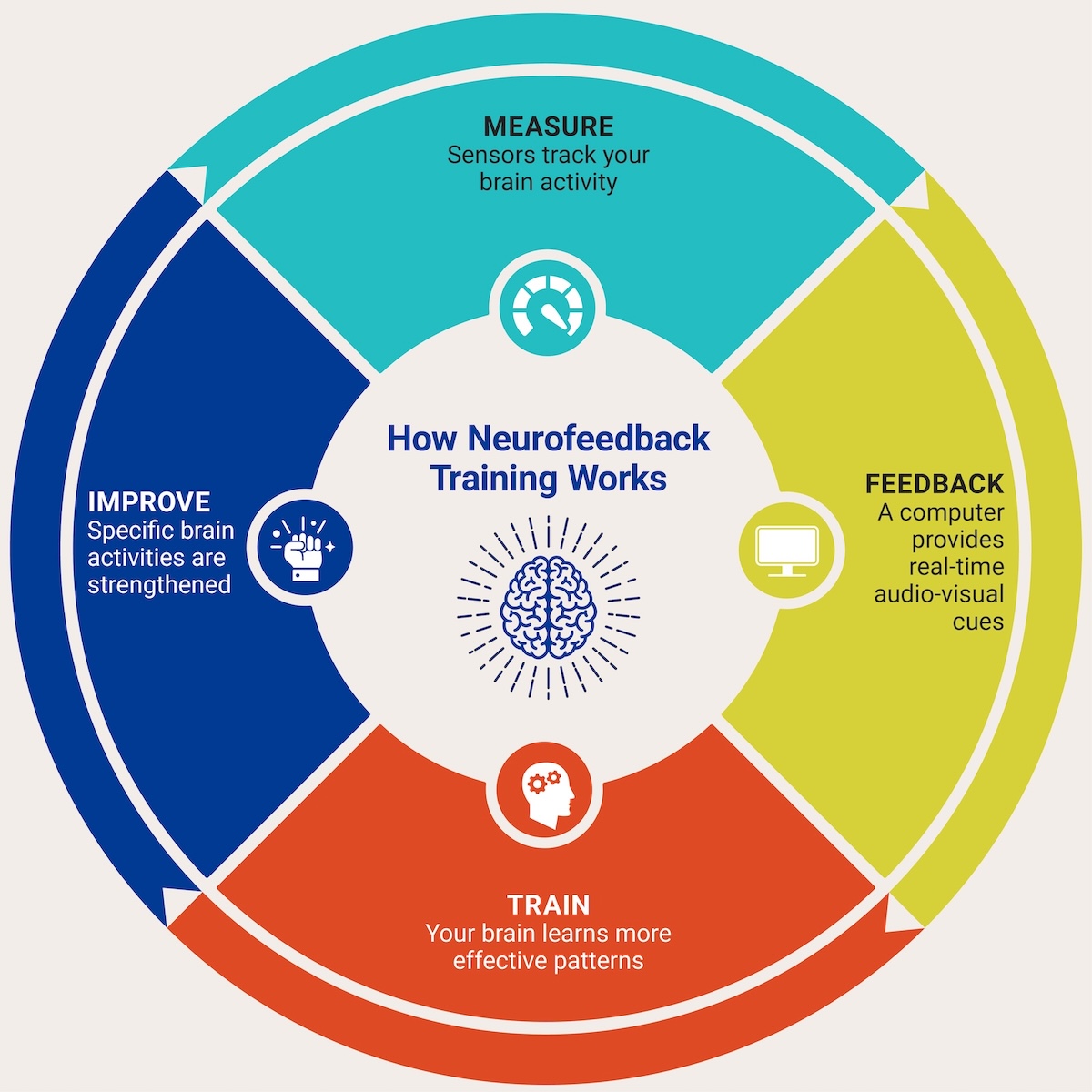
During an automated neurofeedback session, small sensors are placed on the scalp to monitor the brain’s electrical activity, commonly known as brainwaves. The individual then receives real-time visual and/or auditory feedback through specialized software that responds to shifts in brain functioning. Through repeated training sessions, the brain gradually learns to improve self-regulation and efficiency through neuroplasticity — the brain’s natural ability to reorganize and form healthier patterns of functioning. Emerging clinical and real‑world evidence suggests that neurofeedback protocols delivered over multiple weeks (often 20 or more sessions) can produce clinically meaningful reductions in symptoms for conditions such as ADHD, PTSD, anxiety, and depression, though effect sizes and response rates vary across studies and diagnoses.
The most popular Automated Neurofeedback system, BrainPaint, now utilizes automated protocols designed to simplify the training process and increase accessibility across behavioral health settings.
Why a Neuro-Centric Approach Matters in Addiction Treatment
Historically, addiction treatment models often focused primarily on morality, behavior, or abstinence-based frameworks. While these approaches may help some individuals, advances in neuroscience increasingly demonstrate that addiction is deeply connected to brain functioning, stress regulation, trauma exposure, and nervous system dysregulation.
A neuro-centric approach recognizes that many individuals entering treatment may already be experiencing underlying issues such as:
- Chronic stress activation
- Trauma-related nervous system dysregulation
- Sleep disturbances
- Attention and impulse-control difficulties
- Emotional regulation deficits
- Co-occurring anxiety or depression
Rather than viewing addiction solely as a behavioral problem, neuro-centric care seeks to understand how brain functioning influences emotional stability, decision-making, and recovery potential.
Within the National University Alcohol and Drug Counseling curriculum, students explore how neuroscience concepts intersect with counseling competencies, treatment planning, relapse prevention, and case management strategies.
One of the most promising areas of automated neurofeedback research involves its potential impact on substance use disorder (SUD) treatment outcomes. Traditional addiction treatment programs often report long-term recovery success rates ranging approximately between 15–35%, particularly among individuals with chronic relapse histories, trauma exposure, or co-occurring mental health disorders. In contrast, multiple neurofeedback-informed treatment programs have reported substantially improved retention and recovery outcomes, with some clinical models demonstrating positive outcome rates approaching 80–85% when neurofeedback is integrated into comprehensive treatment plans.
From a neuro-centric perspective, these improvements may occur because neurofeedback directly addresses underlying brain dysregulation associated with cravings, impulsivity, sleep disruption, emotional instability, trauma responses, and stress intolerance — factors that frequently contribute to relapse. Rather than focusing exclusively on behavior management, automated neurofeedback seeks to improve the brain’s capacity for self-regulation, helping individuals become more neurologically prepared to engage in counseling, recovery planning, and healthy lifestyle change.
How Automated Neurofeedback Is Being Used
Automated neurofeedback has been explored in a growing body of research involving:
- Substance use disorders
- PTSD and trauma
- ADHD
- Anxiety disorders
- Depression
- Peak performance training
- Sleep disorders
- Autism/Aspergers
Some treatment programs have begun integrating neurofeedback alongside traditional counseling, group therapy, medication-assisted treatment, mindfulness practices, and recovery coaching.
For example, research involving Veterans and individuals with substance use disorders has suggested potential improvements in emotional regulation, treatment retention, sleep quality, and symptom reduction following neurofeedback training.
Importantly, automated neurofeedback is not positioned as a replacement for counseling. Instead, many clinicians view it as a complementary intervention that may help individuals become more emotionally regulated and neurologically prepared to engage in therapy and recovery work.

Preparing Future Addiction Professionals for Emerging Technologies
The behavioral health workforce is rapidly evolving. Today’s addiction professionals must understand not only counseling theory and ethics, but also trauma-informed care, neuroscience, integrated healthcare systems, and emerging treatment technologies.
National University’s Alcohol and Drug Counseling Program was designed to help students build this broader understanding of modern addiction treatment. In addition to traditional counseling competencies, students are exposed to concepts involving:
Neuroscience and Brain Function
Students examine how addiction impacts the brain’s reward system, stress response system, and executive functioning.
Trauma-Informed Care
The curriculum emphasizes understanding adverse experiences, nervous system dysregulation, and the importance of safety and stabilization.
Integrated Case Management
Students learn how behavioral health professionals coordinate services across healthcare, housing, legal systems, and community support networks.
Neurofeedback and Emerging Interventions
Students are introduced to neurofeedback and psychophysiological approaches as part of a larger discussion about evidence-based and innovative behavioral health interventions.
This interdisciplinary perspective helps prepare graduates for work in a changing healthcare environment where collaboration, technology, and whole-person care are increasingly important.
Common Misconceptions About Neurofeedback
As interest in neurofeedback grows, misconceptions also exist. One common misunderstanding is that neurofeedback is a form of “mind control” or experimental science fiction technology. In reality, neurofeedback is based on decades of research involving EEG brainwave monitoring and principles of learning theory.
Another misconception is that neurofeedback alone “cures” addiction. Effective addiction treatment remains multifaceted and often includes counseling, peer support, medical services, family involvement, and community-based recovery supports.
Neurofeedback should instead be understood as one potential tool within a broader continuum of behavioral healthcare interventions.

The Future of Mental Health Care
The future of addiction and mental health treatment will likely involve greater integration between neuroscience, behavioral health counseling, technology, and preventative care models.
Emerging healthcare trends include:
- Increased focus on brain health and nervous system regulation
- Expansion of telehealth and technology-assisted interventions
- Greater emphasis on trauma-informed systems
- Personalized and precision-based behavioral healthcare
- Integrated treatment approaches combining biological, psychological, and social interventions
As these changes continue, addiction professionals who understand both traditional counseling principles and emerging neuro-centric perspectives may be especially well-positioned to lead innovation within the field.
Conclusion
Automated neurofeedback represents one example of how neuroscience and behavioral health are increasingly intersecting within modern addiction treatment. While additional translational research is still needed to better understand large-scale implementation and long-term system impacts, brain-based approaches are becoming an important part of conversations surrounding mental wellness and recovery.
For students considering careers in addiction counseling, understanding the relationship between brain function, trauma, behavior, and recovery may provide valuable insight into the future of healthcare. National University’s Undergraduate Certificate in Alcohol and Drug Abuse Counseling helps prepare students to think critically, work collaboratively, and engage with both established and emerging approaches to behavioral health treatment.
As the field continues to evolve, tomorrow’s addiction professionals may not only help individuals recover from addiction — they may also help rewire the future of mental health care itself.


