CSI: What Forensic Investigation Is Really Like
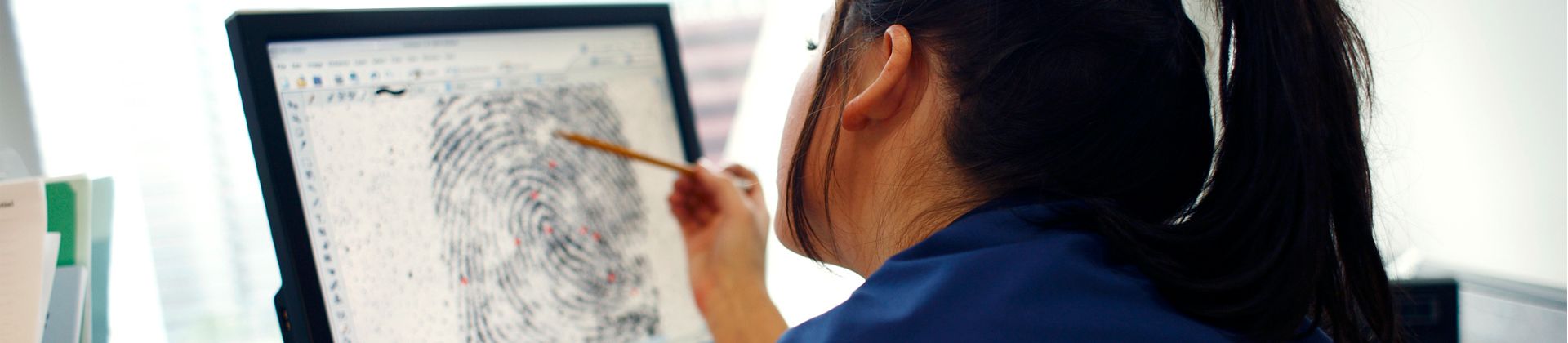
This episode of the National University Podcast features host Kimberly King in conversation with Gabriele Suboch, a veteran crime scene investigator, forensic consultant, and expert witness with more than 28 years in law enforcement in Germany and the United States. She describes a variety of crime scene examples, how forensic investigations differ from TV portrayals, and why documentation, contamination control, and courtroom testimony matter.
We discuss the realities of homicide and burglary scenes, the evolution of DNA and fingerprint analysis, and the emotional toll of working cases involving death, violence, and vulnerable populations.
Content warning: Listener discretion is advised. This episode, in the context of crime scenes, mentions topics such as murder* and sexual assault of children**.
Show Notes
- 03:36 – On-the-job training in the 1990s versus modern forensic education
- 08:59 – Why documentation, sketches, and reports are critical in court
- 11:22 – The sacrifices and long hours behind crime scene work
- 14:04 – * The mental impact of criminal forensic investigation
- 15:50 – Technology changes: barcodes, labeling, and faster evidence logging
- 25:59 – * Protecting the scene from contamination
- 37:47 – The evolution of early DNA testing to STR (Short Tandem Repeat)
- 40:06 – ** The hardest cases involving children and vulnerable victims
0:00:01 – Announcer
You are listening to the National University Podcast.
Kimberly King (00:08.568)
Hello, I’m Kimberly King. Welcome to the National University Podcast, where we offer a holistic approach to student support, well-being, and success: the Whole Human education. We put passion into practice by offering accessible, achievable higher education to lifelong learners.
On today’s episode, we’re talking about what actual crime scenes look like, and we’re joined by Dr. Gabriele Suboch, a veteran crime scene investigator, forensic consultant, and expert witness with more than 28 years of law enforcement experience in both Germany and in the United States. And throughout her career, she’s investigated and reconstructed some of the most complex and high-profile homicide cases. She’s testified as an expert in crime scene investigations, fingerprint analysis, and blood stain pattern analysis.
Plus, she’s also authored the acclaimed book Real World Crime Scene Investigation. So, if you’ve ever wondered what really happens behind the yellow tape or how forensic science helps uncover the truth, then you’re in for a fascinating conversation. And we welcome her to the podcast. Doctor Suboch, how are you? I love your background and this is going to be super interesting.
Dr. Gabriele Suboch (01:25.899)
I’m doing fine. Thank you very much. And thank you for inviting me to this podcast. I’m looking forward to share my experience with you.
Kimberly King (01:34.894)
Excellent. Doctor, why don’t you fill our audience in a little bit on your mission and your work before we get to today’s show?
Dr. Gabriele Suboch (01:43.948)
I, like I said, I was I’m originally from Germany. So, I worked for the Bavarian State Police in Germany. I was working in CID, helped agents close cases and maintained the evidence room. So, when I married my husband who was in the military in 1992, we moved over to Florida. And I applied for the sheriff’s office. I started my career in the US in the jail.
I was a clerk in the Lee County Jail for about a year and a half and then I really was not made for the jail because I felt like I’m an inmate who’s allowed to go home, sleep in my bed and back in the jail. This was not for me. But then they had an opening in intelligence, and I enjoyed intelligence, and next door to me was the crime scene office. So, when we had a homicide or any crime, you know, any high-profile crime, they would investigate it, and I would be running the background checks on the suspects and on the victims.
And then when they came from the scene, they had a little laboratory next door to me, and they always had these bags they brought in, and I went over there and I said, what are you guys bringing in in these bags? I- you know, this is interesting.
So when they had some time they showed me how to do fingerprinting, and they showed me the pictures from the crime scenes and everything, and that’s how I got my interest pretty much in crime scene investigations.
I said, I want to be on the scene. I want to be out there. I don’t just want to run the names in the computer. So the next time they had an opening, I applied for it and I was lucky that I was chosen and that’s when I started in 1995 in crime scene investigations.
Back then we did not have any formal training. They were like on-the-job training, and it was also- there was no college, like we have now, degrees in forensic science. It was just some law enforcement basic courses. I remember I took one with the Florida Department of Law Enforcement, it was an eighty-hour basic crime scene course.
Dr. Gabriele Suboch (04:04.17)
And most of it was on the job training. We were paired with a senior person and whenever they went out to a crime scene, you know, I went with them. So I learned step by step from scene to scene. And it took over a year pretty much before we were, you know, I was allowed to go out on a burglary by myself. Not talking about sexual battery or homicide. That took like two or three years before they would, you know, allow the new people to go out and investigate it.
Kimberly King (04:36.61)
I can only imagine how time has changed. As you said, now there you get you can get your degrees in law enforcement and criminal justice and everything. But but for you, what an fabulous way to get started really on that on-the-job training. And my first question to you, well we’re talking about actual crime scenes today on the show and it’s so interesting. And you’ve written this book so I really want to go run out and get this afterward. But how does the real CSI world differ from the TV CSI shows?
Dr. Gabriele Suboch (05:07.746)
Well, it was actually the O. J. Simpson case in 1995 is what changed forensics and brought the attention to forensic science and crime scene investigation. I think everybody was glued to the TV during those trials ,and then we all saw all the big mistakes they made, you know, lost blood in the vials and, you know, did not secure the scene, you know, there was contamination everywhere. So this was kind of the trial which showed how not to investigate a crime scene.
And after that all the law enforcement agencies looked through their policies and procedures and revised them. Then came the TV shows, the CSI Miami, CSI in Las Vegas, New York, the Jordan, the Bones, all those shows, and they brought the attention to forensic science and it was good in some ways that people saw what forensic science is, what crime scene investigation actually is, that it’s not like in the sixties where you have two detectives, a good one, a bad one, is interrogating the suspect. No, there actually has to be more than that.
There has to be physical evidence that links him to the scene. However, those shows, especially the CSI shows, they were depicting technology that was either not available on the market yet, or that was totally not available in the budgets for small agencies.
So it was showing how the future in CSI can be, but not how the reality actually is. For example, you know, they drove a Hummer, you know, we had a little Ford van. You know, they were like walking around in fancy clothes and high heels. Yeah, we had boots and BDUs and a black t-shirt. And now this is just the little optical things. Then they were they were somehow jackals of all trade. They went to a scene, this smells like this and this chemical and this is built like this and this. No. There’s nobody who can know all that. So, you know, that’s why we have laboratories, that’s why we have analysts, that’s why we have different units in the forensic system and different disciplines. So there is no one who knows it all.
Then what I noticed while I was watching those shows is they go to the scene; they never take notes. They just go there, they remember everything, you know, they must have this beautiful memory. Because they never take notes or they never record anything. They never draw a crime scene sketch. But when they go to court, then they remember every minute, what they did, and what was there. So, the same thing with evidence collection. You want to photograph, you wane mark your evidence, you’ve got to package your evidence properly, you need to have a chain of custody. The CSI TV- went to the scene, picked up the evidence, put it in the bag, and that was it.
All this evidence actually they’re collected would be inadmissible in court.
Kimberly King (08:23.362)
You know what? It’s so it’s the Hollywood CSI effect, right? And that like I you had mentioned, wearing heels and running around and not taking notes. They glamorize it and you know, it’s it’s hard work. But that is so funny that, you know, just from that outside observation, from the out the people that don’t understand what note taking you have to have all of your notes take those photos. and you and I both know maybe a month later on if with when you show up in court, you don’t remember everything. So yeah, you’ll have to go back look back into your notes.
Dr. Gabriele Suboch (08:59.478)
Yeah, you have to take documentation, which is photos. We did in homicides, we did silent videos as well. And then you have to have, you know, crime scene sketches where, you know, sketch the evidence, the inside, the outside of your crime scene. And you have to be as detailed as possible because you have to write a crime scene report which becomes a public record. It’s accessible, you know, to the judge, to the prosecution, to the defense. And you have to testify to that.
Kimberly King (09:32.494)
So I that’s my next question is how does it affect the jurors also in the trials or just really going into court? you and I both have children that are in law enforcement serving and you know, sometimes they get called in. They do also have to keep their notebook because they, you know, it’s two sides, right? So it is having that documentation. Can you provide an example of a specific case where it’s really affected with having that documentation and jurors?
Dr Gabriele Suboch (09:59.746)
Yes, I can actually and it was a double murder case which I worked in 2005, and we had the suspect and there was evidence showing that the suspect was at the scene. But and then we went to trial and then during trial it came back with a hung jury. Later on, we found out that one of the jurors stated there was not enough DNA evidence because in CSI on TV they always have like multiple DNA evidence, and this was not there, so I didn’t find it was enough to convict. So, this was a high-profile case, so we ended up in a change of venue. We had to go to St. Petersburg, from Fort Myers to St. Petersburg to trial. We retried the whole case again and within an hour we had a verdict of guilty, and he is now on life in prison without parole.
Kimberly King (10:58.476)
Wow, you would be the key figure, I would imagine, that crime scene, all of the- I do want to talk to you about even, you know, the blood, you know, looking into every specific detail. And you did mention as well that it’s not just you can come in and do it all. You have experts in each division. And so that I would believe you would be the key witness in all of this.
Dr. Gabriele Suboch (11:22.562)
Just depends what it depends what case it is. You know, in our unit we were six crime scene investigators. We were covering the whole county 7 days a week, 24 hours a day, 365 a year. So I spent my Thanksgiving after my Thanksgiving in the homicide scene, you know. I spent Christmas Eve going- we were ready to go to church- I went to the autopsy instead, so it takes a lot of sacrifice. And you miss a lot of birthdays and social gatherings because you’re either on call or you actually be called out on a scene.
When you’re called out on the scene, you’re out there for sometimes 24-28 hours. It’s not like you can say, in my eight hours of work are over, I’m going to go home now, see you tomorrow. No. You’re on the scene; you’re on the scene.
I remember we had a scene, it was started working. We worked 4/10 day shifts, so from seven to five. So Friday afternoon at 4:30. So we were ready to go home for the weekend. Then case the came case in that they found body parts in the aquacultural dump. So okay, we went out there and we dug through the whole night through the aquacultural dump from like three trucks which had unloaded, because when they unloaded one of the trucks, there was a black plastic bag and there was a hand in it.
So that’s when they called us. So, we had to go out, and we were digging all night in the dark with little lights going on and it started raining and till the next morning, you know, open all the bags and see what’s in there. We found a bunch of body parts, but we didn’t find the head or the torso. So then after that it was like by ten o’clock or eleven o’clock the next morning. We were finally able to go home. So, from Friday morning seven till Saturday eleven, you know, we were out working the scene.
Kimberly King (13:27.478)
And you know, and people don’t realize what you just were saying. I mean yeah, she may go home, but that doesn’t mean that you turn your brain off after what you just discovered and what you had to dig through and you know, that’s a whole other you know, conversation about mental health and well-being after, you know, you see things that people don’t see every day and you have to process that. And so, and on a holiday where your family is together and you have to leave and be the one doing the work. So, we thank you for your service because it is you are serving and making sacrifices.
Dr. Gabriele Suboch (14:04.234)
Thank you. Absolutely. You know, you talked about the mental stage. It is actually when you get to a scene, you are looking at the- let’s say you go to a murder scene inside a house. You look at the scene evidence. You’re going to look, okay, there is a casing from a bullet, you know, there’s a bullet hole, you know, there is a door open. So, you pay close attention to everything that’s there because you have to be as detailed as possible.
So, you pretty much do not have time to mentally really think about, oh my God, there is a dead person laying on the floor. You just see it as the physical evidence, and you see it as, what can I do to solve this crime and to bring closure to the families? That’s kind of what you’re thinking. You know, how do I put the puzzles of this crime scene together that it leads to a suspect?
Kimberly King (14:57.996)
You know what and that’s of like you’re compartmentalizing and not everybody knows how to do that. But yeah, you know, yes, you’re there, you see the dead body, but you’re there to do your work, your job and to do all those fine details. And you know, the I guess, you know, we really not a lot of people think about that deep dive, what you do.
I you know, what case stands out right now to me is the Idaho murder case. And I feel like; what year was that, 2023 or 2024? But there’s so many questions about that. And I think all these years later, especially from the time you started until now, and you mentioned the O. J. Simpson case, what do you have thoughts? I mean, this is me just throwing it out there because from my public view, I feel like it’s been a debacle. But what do I know? What are your thoughts about that?
Dr. Gabriele Suboch (15:50.998)
Well, I think technology really has advanced and has made a lot of things easier. For example, back then, you know, we had to write every bag where we collected the evidence. We had to write the case number, the date, the time, the location, you know, initial and everything by hand on every bag. Now we have a computer with a barcode system, you know, where we can print out the label and put the label on there.
And so, we’re going to turn that in and then also this barcode system will write the property receipts. And now we can all input this, so we don’t have to write each receipt by hand. You know, we punch it in one time in the computer and then it does it on multiple pages. So that is a lot of time saving and, but we still have the report writing and that’s very time-consuming because a homicide report may easily be 25-30 pages.
Kimberly King (16:44.941)
Yeah.
Dr. Gabriele Suboch (16:45.376)
And the more detailed you are, the better because this report, your photos and your sketches and your notes are your memory when you go to court and sometimes it takes six months or a year before a case goes to trial.
Kimberly King (17:02.43)
And that is true too. I think people don’t realize the time can s you know, like just from the time the crime happened and then they realize they think, well, why is this taking so long? Just getting into the legal system, and you know, and making sure the evidence is there and you’re put putting your case together. I think we should take a step back really quickly because I should have probably started with the question of what are the tasks of a crime investigator? I know you know, you did kind of say, you kind of stay in your lane, but for you as a crime investigator, what tasks do you do you complete when you’re on the scene?
Dr. Gabriele Suboch (17:43.702)
Well let’s let’s just for example make it a homicide scene. You know, you get notified by the watch commander or by the supervisor from communications and they advise you that there is a death investigation at 123 Main Street. Then that’s when your note taking starts. You need to write down when you were notified, by who, and where do you’re supposed to go.
And then we had take-home crime scene vehicles. I would get dressed, go in my vehicle, drive to the scene. At the scene, it’s roped off with a yellow barrier tape. So, you need to sign in: on the contamination list, on the crime scene log. And then you get a walkthrough, either from the first officer on scene or from the detective that is working the case.
During the walkthrough, you take notes because there might be information there, you know that the point of entry, the point of exit. And also the more notes the better because you have to look at all these points which they which the investigator tells you for your later investigation.
Kimberly King (18:55.468)
Yeah. Wow.
Dr. Gabriele Suboch (18:57.558)
Yeah, after we did the walkthrough, you know, you will document your crime scene with photos. So, we take overall photos. Let’s say it’s a single-family home. So, we walk all the way around the house from all compass directions, the outside of the of the residence, including the driveway, the cars in the driveway and everything. Then we would go inside and we go overall pictures of every room in the house.
Then we take medium range pictures, which are pictures where there might be a piece of evidence or a piece of interest, and we show where the location of that is. After we have done all this, in some cases, you know, we also have either drone photography for aerials, or when I was working, we still had the helicopter, so I was flying in the helicopter taking aerial photos of the scene. But that usually was like, could be a day or two days later. Unless there is some evidence which needed to be documented. Then we would do it right away.
So, after we have done our photographs, our first set of photographs, then we would draw a sketch. A rough sketch of the inside of the outside, the layout of the garden and everything, the fences. Then we would do a crime scene sketch of the inside.
Then, usually if the body is at the scene, we cannot touch the body, because we don’t have jurisdiction. Law enforcement has jurisdiction over the crime scene, but not over the body. That’s the medical examiner.
So, we will have to wait till the medical legal death investigator, or the medical examiner comes to the scene. Then they examine the body and take pictures, and they can search the body, take out whatever the contents of the pockets are, the driver’s license, the wallet and all that. We are not allowed to do any like this. But we’re taking the same set of pictures as the medical examiner does at the scene. And then the evidence, the medical examiner collects the evidence but then can sign it over to us via property receipt with the chain of custody. Then we can collect it and put it into our evidence room.
This can happen either at the crime scene itself or sometimes it happens at the morgue. It depends on the medical examiner, you know, what policies and procedures they have. So after that, let’s say after the medical examiner is done, we have done our pictures, then we measure the body because we need to be able to reconstruct the scene.
That means we need to be able to put this body back where we found it. So we’re gonna take pictures from two fixed points, let’s say the southeast and the northwest corner of the room, and we we measure from each corner to the head, to the torso, to the right arm, to the right elbow, right foot, left foot, and I’ll measure the whole body out, and then we measure the distance from A to B. So we have triangulated measurements and if it comes down to the point where you have to reconstruct for the jurist. Then you can go back in the house, and you can actually put the body back there where we found it.
This measuring system we do with every piece of evidence has to be measured before we physically collect it. So let’s say after the body is removed, then we take pictures of where the body was at, because there might be something underneath there. If it’s a carpet, we might find some fibers, we might find any kind of trace evidence.
And then we’re gonna start looking at in the circular motion from the body outwards, we’re gonna look for evidence. What do we find? What looks disturbed, you know, is there blood drops on the floor? And then everything we find, we’re gonna use yellow markers and we mark it. And the numbers start with one and continuously. Once we have all the markings done, then we take another overall picture. So we can show all the markers in that room.
Dr. Gabriele Suboch (23:15.628)
And then we do our medium range pictures, and we put a scale on there to show the size of the evidence. For example, if it’s a knife, we want to see the length of the blade. And then we’re going to take a close-up picture and that’s also with scale. So, we create another total set of pictures. And homicide usually is being twelve hundred and fifteen hundred photos. (Wow.) Yeah.
You know, we always used to were trained and said, you know, the more the better. Film is cheap. Well back then it was film. Now it’s even better with the digital cameras. They said better a hundred more than a hundred less. (Interesting.) Then after we have that, after we have our evidence marked, then we add it into the sketch. Cause we need to show where our evidence was found in the crime scene sketch.
And after that we do our measurements, like I explained, from two fixed points. We’re gonna measure to each item of evidence. We make a listing on that, a table. And then after that we’re finally ready to physically pick up the evidence. Then we have to look at what kind of evidence is it? If it’s biological, for example, a t shirt with blood. It’s biological evidence in it; it has to go into paper.
In a if it’s a sexual battery then if it’s semen in underwear or something, it’s biological. Everything that is biological has to go in paper. Any evidence you wanna have DNA tested needs to go into paper because plastic can deteriorate the DNA.
Kimberly King (24:57.142)
Yeah. Oh interesting.
Dr. Gabriele Suboch (24:59.372)
So if we have a firearm, for example, you know, we have to follow the procedures, we have to unload it and we have boxes for the firearm, and we can only package the firearm and the ammunition or the firearm and the magazine, but the ammunition has to be packaged separately so that in court when it’s presented, nobody is able to load the gun and fire in the courtroom.
Kimberly King (25:27.85)
Which that- okay, now I think about the Alec Baldwin case, (It happened.) yeah, or you know, and then I yeah. The Nancy Grace mother’s case or Nancy Guthrie, I mean. So, there’s yeah, you see things that are being contaminated in between or not completely I don’t know, like as a crime scene investigator, I would imagine you’re an expert. So you must sit back sometimes and go, What are they doing? Or you know, or they could have done this so much better, right?
Dr. Gabriele Suboch (25:59.182)
A lot of times it is contamination, and it is detectives just jumping the gun. Investigators, they just want to (thinking “oh my god, I need to find this, I need to find this within the first forty-eight hours“), which is usually not possible. And you know, they enter the crime scene, they don’t have their PPE on, their protective gear, you know, like the booties and like gloves and they touch things, so that’s another responsibility as a crime scene investigator.
You’re kind of the watcher for the crime scene and you know, you have to tell the detectives, no, not like this. You’re not- you have to wear booties; you know you’re not coming in here. And I actually ran into; this is a funny story. I ran into a case where we had a murder case, and the victim was stabbed numerous times, and he bled out on the carpet. So, it was a mess. And the cold carpet was bloody, and we pretty much had the booties on, and we had the big Tyvek suits on because it was blood everywhere. And then while we were documenting, taking pictures, notes, and collect evidence, it knocks on the door and it’s a patrol sergeant.
And I said, Sir, can I help you? And he said, Yeah, I want to come in. I said, Sir, what do you why would you want to come in? And he said, I want to see what’s going on here. I said, I’m sorry, you know, this is an open crime scene. I can’t let you in. And he got really upset. He went to the lieutenant, and he wanted to write me up. He wanted to say, she is a civilian and she tell tells me not to go into the crime scene. I’m a sergeant, you know, so it went all the way up to my major and the next morning when we had a meeting in in CID, the major was like and I hope that everybody in crime scene is acting like she did because she followed policy and she did absolutely the right job. I was backed up by everybody so that I did not let him in. But this shows that people are curious, and they just want to go in there even they have no business to be in there and letting them in contaminates a crime scene.
Kimberly King (28:02.158)
Yeah.
Kimberly King (28:18.284)
Thank you. Which again, back to what we see on the you know, from social media and media, the Nancy Guthrie case, weren’t there pool cleaners that were walking through the crime scene and the next day (Pizza delivery.) Yes, right. So that’s crazy. But I would imagine with that being said, again, especially from when you started to know, all the eyes on it because it’s a social media, you know, everybody is curious, or the media too, I mean, ever all the cameras are on. Has that changed a lot too, the way you’re trying to do things behind closed doors? But everybody wants access.
Dr. Gabriele Suboch (28:56.002)
Yeah, everybody wants access, but I well I can only speak for Florida and our agency. What we did was we kept the media at a great distance. You know, we would not let them take pictures or fly drones in there or anything like that. So we would barrier have barriers and have officers, you know, tell the media, please you cannot go any further, you know, and they were very understanding. We never had any problems or issues with them. Because they knew we had when if we have some information that we can share, we would share the information for the public information officer. But as crime scene investigators, we were never talking to the media itself.
Kimberly King (29:43.638)
Right, which is smart. I came from the media and media can be so very pushy, but yeah, you know, it’s but they’re the you are on an actual crime scene investigation and that’s what they just need to realize. That’s it’s crazy.
Dr. Gabriele Suboch (29:56.824)
Yeah, and you honestly you don’t have the time for it either.
Kimberly King (30:00.62)
You don’t. You’re working, and you don’t have (time) yeah, time is of the essence.
Dr. Gabriele Suboch (30:05.454)
Yeah, because you are you know, you’re so busy, you have to do this. And you know, I’m talking about evidence collected. I’m not talking about ten items, you know. I remember in some cases we had seventy and eighty items which we collected.
So that takes a lot of time and the searching as well. So larger scenes we used to have like two or three crime scene investigators. One would be the lead and the other two would be assisting. The lead is the one who writes the report, and the lead is the one who collects the evidence and is responsible for the evidence.
Kimberly King (30:41.676)
How how many people are typically on there? So is it like two or three crime scene investigators?
Dr. Gabriele Suboch (30:46.964)
It’s usually two or three. It just depends on the scene. If you have one scene with multiple scenes, then we would have like one person is going to a search warrant in the suspect’s house, the other one would do go to his work and do a search at the vehicle at his work, and then the other one would be working at the crime scene itself. Yeah. So that all depends. You know, sometimes we had four and five people there.
Because if you have to do a search for a weapon in a wooded area or something, you can’t do that with one or two people. So we would actually call the police academy and ask for the recruits to come out and assist us in searches.
Kimberly King (31:29.206)
Yeah. I love that. Yeah. Get them started early on. Just like the way you learned on the job. Can you talk a little bit, Doctor, about the different forensic disciplines that you apply, different between burglary and homicide?
Dr. Gabriele Suboch (31:44.002)
Yeah, if you have a regular burglary, well burglary is a felony crime, so it is really sad if you’re the victim of a burglary. And mostly what you find there is shoe impressions. You know, if they break a window or something and there is a flower bed or something under the window, you’d have a shoe impression. Fingerprints is very good evidence you can find. You might have some tire tracks if they came with a truck or with a car.
And you might find some blood evidence if they cut themselves, you know, while they were breaking the glass or breaking the window. So that’s mostly what you find at burglary scenes. And that’s not that time-consuming as a homicide scene or a sexual battery scene or something, you know, a person crime. So, a burglary is, we’re used to working by ourselves.
Kimberly King (32:42.794)
Okay, okay. That’s interesting.
Dr. Gabriele Suboch (32:44.75)
Yeah, so we had business burglaries, we had church burglaries, vehicle burglaries, house burglaries, and we also had home invasions is when the owner is at home when the burglary occurs. You know, so those cases we would work alone. Even bank robberies we would work alone. We would document alone.
Kimberly King (33:06.006)
Yeah. Okay. Yeah. They don’t, you don’t have, like a you know, a homicide.
Dr. Gabriele Suboch (33:13.068)
Yeah, you have like the bank robbery is like, you know, you have the same thing. You have shoe impressions, you have fingerprints, you know, you might have touch DNA is what, you know, came out since we have STR now, the DNA testing method. We can do “touch DNA” and “wear DNA”. So that comes in really well. If we look at masks from bank robberies, you know, we can run them through and see if they can find some DNA on that. And then run it for CODIS and see if they come back with a suspect.
So, and then a homicide scene, you’ll have more you have blood spatter analysis, you’re going to have shoe impressions, you have tires, you do a lot of chemical processing because not all the evidence is visible to the naked eye. Like you can have bloody shoe impressions, or you can have a bloody handprint which you don’t even see, especially if it is like, let’s say, it’s a bluish color wall.
And then there is a bloody handprint on there, it might not be visible. So, we use chemicals. We use amido black to enhance them. Yes. Or we use the alternative light sources. Or we use the luminol or blue star. That’s the stuff you see on TV which glows in the dark.
Kimberly King (34:34.752)
Right. Yeah. That’s how I was just gonna- dust it and then there you see that.
Dr. Gabriele Suboch (34:38.827)
Yeah, that’s luminescence and what it does is reacts with the blood and then it it makes it visible. However, luminol especially has some false positives. So, once you do a luminol test, you mark the spot and you okay, this luminol said there is blood, but you don’t know if it’s blood. It could be a bleach cleaner, it could be chocolate, it could be anything else. So, you have to do a presumptive blood test, which is the second chemical test.
Kimberly King (35:10.56)
Is that- okay, right so I was gonna go back. That blood stain pattern analysis, does what you’re talking about all go toward the blood stain analysis with all these different chemical tests?
Dr. Gabriele Suboch (35:21.674)
Yeah, that’s part of it because you need to know that what you’re analyzing is indeed blood.
Kimberly King (35:27.116)
Okay, okay, ’cause you said yes, it could be chocolate.
Dr. Gabriele Suboch (35:29.058)
Yeah, it could it could be red wine.
Kimberly King (35:32.172)
Yeah, that’s true.
Dr. Gabriele Suboch (35:33.964)
Yeah. So anything that looks like blood, you know. So, you want to check that first, and then you want to do the presumptive test which tells you it’s blood, but it doesn’t tell you it’s human or animal. So, if you have a dog or a cat or any animals in the house, you know, you want to do what’s called a “hexagon OBTI test”, which determines human from animal blood. So, you’re actually going to do three tests before you actually would collect a sample of their blood.
Kimberly King (36:03.288)
So with that being said, my question is what if you have both animal blood and human blood, but from different times? Is there a timer? Is there a deadline on when you can test to find out? Like what if that what if you had blood from a dog ten years ago or something? Does that time out? Can you still figure out that that’s from a dog if it’s been on the wall for ten years? I’m just throwing this out there.
Dr. Gabriele Suboch (36:28.44)
Yeah, I know. And that is the one downfall on blood evidence and on DNA and on fingerprints as well. We cannot determine when it was deposited.
Kimberly King (36:38.623)
Oh, interesting.
Dr. Gabriele Suboch (36:40.194)
For example, if you have if you have a homicide case and a friend of the family is the suspect, the friend was probably very often in the residence. So, his fingerprints and his DNA would be found in the house. But that doesn’t mean that he’s the murderer.
Kimberly King (37:01.534)
Interesting. And they; yeah. Wow. And they always say it’s usually somebody you know, but you know, I guess it, it’s true.
Dr. Gabriele Suboch (37:09.506)
Yeah, that’s that opens in a total other can of worms, you know. That’s when you need search warrants and body search warrants and kind of there is a lot of legal steps you have to do before you actually can go further in the investigation. And you have to make sure that you’re not violating the Fourth Amendment search and seizure, because then everything, you’re legally obtained will be thrown out in court.
Kimberly King (37:32.856)
So with that being said too, what how accurate are the fingerprint identification in blood evidence such as DNA? How like this has probably come a lot more accurate now versus back in the when you first started.
Dr. Gabriele Suboch (37:47.74)
Yeah, back then the DNA was the RLNP and that was like only 80% accurate. And then came PCRP and back then the first testing you had to have liquid blood that was refrigerated and you had a big blood sample size to be tested. Then came PCR, the polymerase chain reaction, which is able to multiply the smallest blood drop into a testable size.
So that was the revolution in DNA and then came STR and with STR came also the “rare DNA” and the “touch DNA”. Then we can also differentiate now with YSTR which is from the male chromosome, and then we have mitochondrial, which is from the mother.
Kimberly King (38:38.28)
Wow. It’s fascinating. I’m going to get your book because I literally am I doing this deep dive. I it’s so interesting. I want- we have to wrap things up here, but I guess my last question would be on a personal note, how does dealing with death and injury affect you and would you consider these emotional crimes that you’ve investigated? I know we talked a little bit about this earlier, how it sits with you, but how do you balance this to make sure that you’re good?
Dr. Gabriele Suboch (39:10.574)
How did I balance it? You know, you balance it with support from your family and from your friends. You know, you need to learn to just shut everything out pretty much when you work the crime scene and then spend some days where you relax and it is not made for everybody, you know. Some people they just cannot forget the photos and what they saw. You know, but that’s why not everybody is made and can handle crime scene investigations.
You know, the cases which were, you know, murder cases, were bad. You know, burglaries and property crimes, you know, they did not affect people really – mentally or physically.
However, what I found was the most difficult ones to investigate were children. Sexual assault of two- or three-year-old children. Or, you know, in Florida we have pools, children drowning in the pool while the parents are partying. You know, or child abuse, child neglect, and then the elderly people. That actually you know, is gets you emotionally.
Kimberly King (40:32.106)
I hear you on that. And I would imagine writing your book might have been a little bit cathartic too for you to just process, get it out, and then let others, you know, really kind of see into the world that you’re living. We thank you for your service and what you’ve done and what you continue to do. We have to wrap this up now, but we really appreciate you sharing your knowledge. And if you want more information, you can visit National University’s website at nu.edu. And again, Doctor, thank you so much for all your time and information today.
Dr. Gabriele Suboch (41:07.552)
You are very, very welcome and it was my pleasure speaking to you.
Kimberly King (41:12.064)
Excellent. Take care and be safe.
Dr. Gabriele Suboch (41:15.128)
Thanks.
Kimberly King (41:19.49)
You’ve been listening to the National University Podcast. For updates on future or past guests, visit us at nu.edu. You can also follow us on social media. Thanks for listening.