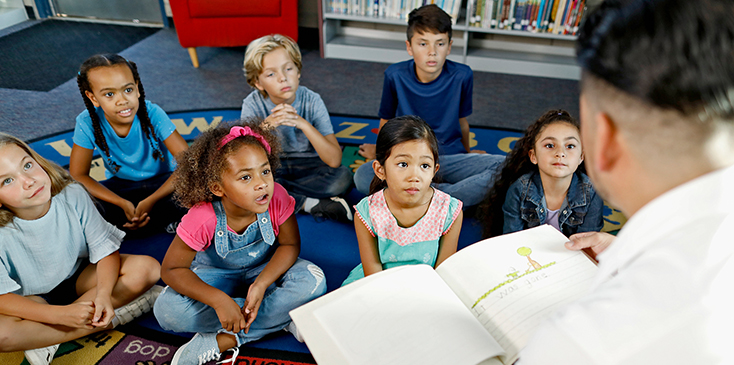
Learning does not start at kindergarten. From birth, children are exploring, experiencing, and learning from the world around them in a variety of way. The process of shaping this time of rapid development in a formal setting is known as early childhood education.
What is Early Childhood Education?
 Early childhood education is the branch of academia that involves teaching children from birth to approximately eight years old. The focus is largely on preparing students for a lifetime of learning, which involves the development of their social, emotional, cognitive, and physical needs, according to the United Nations Educational, Scientific, and Cultural Organization (UNESCO).
“Early childhood education provides young children with foundational support, enhancing school readiness and setting them up for long-term educational success by fostering cognitive development, interpersonal skills, and emotional intelligence in their most formative years,” said Dr. Robert Lee, dean of the Sanford College of Education at National University.
Important topics in the field include learning and brain development, peer cooperation and collaboration, early cognition, and emerging literacy.
Working in Early Childhood Education
What is early childhood education like as a career? The field offers a variety of exciting and rewarding job opportunities — and demand for many of these positions is on the rise.
“A career in early childhood can be a rewarding profession and a way to make a positive impact in your community,” Lee says. “High-quality early childhood education is crucial as it strengthens early brain development, fosters essential life skills, and contributes to future academic achievement, workforce readiness, and overall well-being.”
When it comes to entering the field, National University’s Bachelor of Arts in Early Childhood Education is a powerful tool. Common roles that this degree can qualify you for include:
- Childcare centers: Prior to entering the formal school setting, many children learn and are cared for in daycares, after-school programs, and similar environments. With a bachelor’s in early childhood education, you will typically qualify to work in one of these childcare centers. While a bachelor’s is not always required, the degree can set you apart when applying for jobs, and prepare you to excel once you secure the position.
- Preschool teacher: Preschool is often a child’s first introduction to structured education. As a preschool teacher, you are responsible for the education and care of children from birth to age 5 to include the social, emotional, cognitive and physical skills needed to succeed in Kindergarten. Demand for educators qualified to fill this role is on the rise. According to the Bureau of Labor Statistics, the number of positions for preschool teachers is expected to grow 4 percent from 2023 to 2033 – about as fast as average for all occupations.
- Preschool or childcare center director: Interested in leading? Another early childhood education role growing in popularity is that of preschool or childcare center director. In addition to prior work experience, you may need a master’s degree in early childhood education to apply for some of these positions.
Your Early Childhood Education Degree
Earning a bachelor’s degree can be a powerful step toward beginning a rewarding career helping young children. Wondering how to get a degree in early childhood education? With both online and on-location options, National University makes it more convenient than ever to advance your education.
The National University Bachelor in Arts in Early Childhood Education (BAECE) degree program is based on the latest theories, contemporary perspectives, and research findings in the field. Through the carefully designed curriculum, students acquire the knowledge, skills, and field experiences they need to develop as efficient and effective professionals in early childhood education.
Ready to learn more? You can request information online through our programs page or contact us.


