
Whether a teacher specializes in math, English, or science, it’s important they master their specific area of expertise. An educator’s proficiency in their subject area can be measured in terms of grades, certifications, and exam.There are also intangible qualities that can’t be measured to help them become better, more effective teachers.
Sometimes referred to as “soft skills,” these qualities of a good teacher can be developed over time to help educators better connect with students and parents of students.
Soft Skills for Teachers
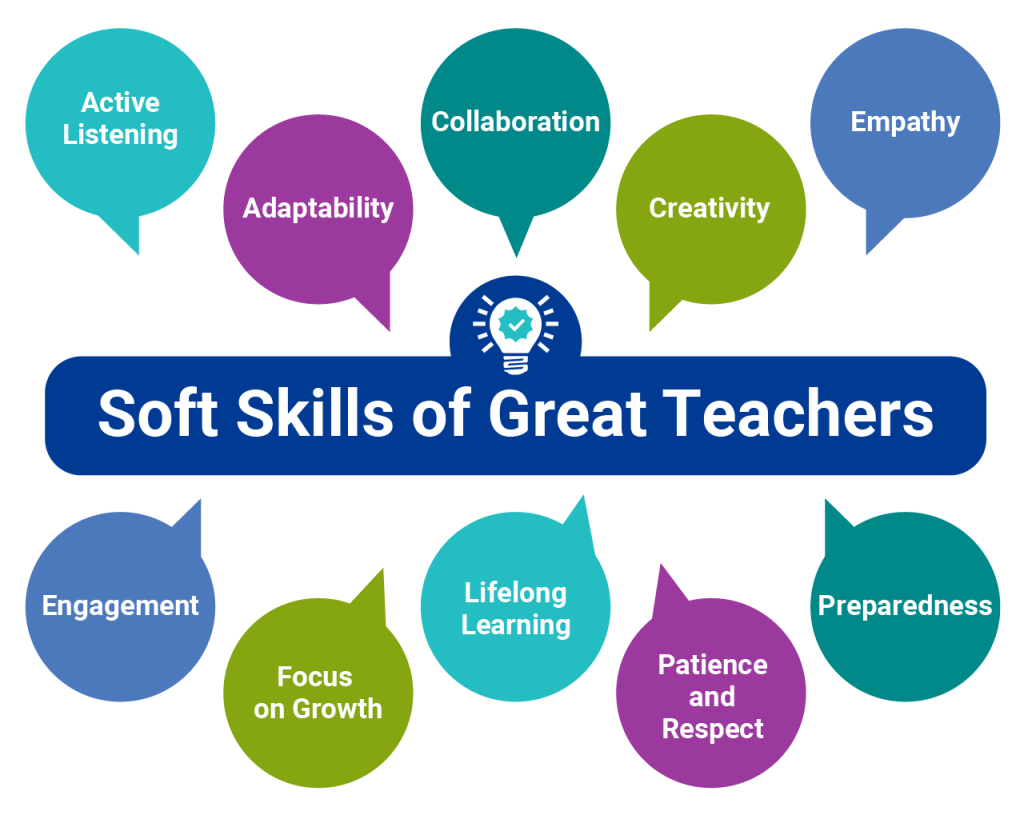
Whether you’re studying to become a teacher or have taught for years, soft skills can help you do your job better. In this guide, we explain the top soft skills for teachers. We also share simple tips to help you improve each one.
Communication Skills for Teachers
Perhaps the most important category of soft skills is communication. Teachers need to be able to speak to a variety of different people. They need to be able to clearly speak with students. They need to communicate well as with parents. Great teachers need to know how to talk with people, not at them.
Communication Skills Between Teacher and Student
A teacher needs to convey information about a particular subject. It’s finding ways to make lessons engaging, material memorable, and to get students involved. Teachers need to make sure lesson plans are relatable to students by tailoring lessons to fit different grade levels and learning styles.
Beyond instructing students on course materials, teachers also need to develop lines of communication with students. In instances where children feel alienated or bullied, a teacher should be able to build trust with their students and use their communication skills to help students in need.
In order to foster a sense of trust and improve student-teacher communications, teachers should:
- Learn their students’ names
- Understand students’ likes and dislikes
- Praise good work and offer constructive feedback when a student does poor work
- Be observant of how each student normally behaves in the classroom and notice if behaviors are unusual
Communication Skills Between Teachers and Parents
Teachers should strive to build trust with their students’ parents. One way to do so is by listening to parents. While teachers may be used to leading the discussion in the classroom, they should be prepared to listen to parental concerns or in situations where a parent may help them try to understand a child’s unique challenges.
Teachers need to convey to parents that they are invested in their child’s progress. In developing an understanding of each student, teachers can also help parents understand their child’s learning style, likes, dislikes, or any behavioral issues.
Some ideas teachers can look to in order to help build better communication skills with parents may include:
- Engaging in regular communication (face-to-face, email, phone) with parents to keep them informed of their child’s academic or behavioral progress
- Not getting defensive if a parent offers a critique or defends their child’s behavior
- Documentation of all communications with parents, including the date of the conversation, names of both parent and student, and a summary of the discussion
If teachers are hesitant to give out their personal contact information to parents, there are a number of programs and apps available to help open the lines of communication with parents and keep a written record of communications. Apps such as Talking Points offer two-way messaging between parents and teachers to help them stay on the same page. Other apps, like School Status, allow teachers to distribute newsletters, schedule parent-teacher conferences, and even enlist parents to help with class activities and create a more involved atmosphere.
Leadership Skills for Teachers
Teachers need leadership skills in order to earn the respect of their students, parents, and peers. While the philosopher and politician Niccolo Machiavelli pondered whether it is better for a leader to be feared or loved, modern classroom approaches indicate that there needs to be a healthy balance.
While teachers should always be kind and respect students. They demonstrate that there are consequences for bad behavior. Allowing students to continue misbehaving without any consequences can encourage more missteps and can pose a problem for students in the long run.
Beyond becoming an empathetic, yet authoritative presence in the classrooms, teachers can continue to improve leadership skills by connecting with educators from other schools or from neighboring districts. This can help them gain insight into how other schools and teachers operate, then refine their own approach.
Building Greater Cultural Awareness in the Classroom
Classrooms are becoming increasingly more diverse. Students and teachers now interact with people from different cultural, demographic, and socioeconomic backgrounds on a daily basis. As leaders in the classroom, it’s important for teachers to develop a knowledge and understanding of various cultures. Not only does it help create a more respectful classroom environment, but it can also help teachers better connect with students across a wide variety of backgrounds.
According to Dennis Van Roekel, President of the National Education Association (NEA), “Educators with the skills, knowledge, and attitudes to value the diversity among students will contribute to an educational system designed to serve all students well.”
The NEA recommends incorporating materials that highlight the work of racial minorities and members of other marginalized groups within an educational curriculum. This can help to improve student outcomes. Creating an environment where a student body sees that the contributions of minorities are valued builds greater cultural competency among students.
In order to create a more informed and inclusive curriculum, teachers and school administrators may consider conducting a review of existing curriculum or policies to see where they may be able to better diversify and improve the curriculum. For instance, teachers and principals may consider ensuring school communications with parents are available in languages other than English.
Teachers may also wish to conduct a cultural perspective self-assessment. To nurture greater understanding of (often unconscious) biases, great teachers work to actively learn students’ cultures and life experiences.
Social Emotional Learning (SEL) for Students and Teachers
In today’s scholastic environment, teachers are expected to do more than just teach. Teachers must also be problem-solvers and mediators, de-escalating situations where tensions may run hot between students.
Studying social emotional learning (SEL) as a methodology can help teachers, as well as students, be better equipped to handle complex problems. SEL teaches an awareness of emotions and what triggers those emotions and deal with emotions in constructive ways. SEL can help children and adults make better decisions and demonstrate greater empathy for others.
Teachers can lead by example, weaving SEL into the curriculum of a given subject area. For instance, in an English or history class children can be encouraged to talk about a character’s actions in a story, or what may have prompted a historical figure to respond the way he or she did. Then, explore the consequences of those actions. Group projects can also be an example of SEL-in-action to develop student problem-solving skills.
Becoming a Teacher Means Constant Personal Growth
Becoming a teacher can be a rewarding experience that helps students reach their full potential. This encourages constant self-examination and growth for educators. If you’ve considered becoming a teacher, learn how National University’s Sanford College of Education can help you achieve your goal. Learn more about our on-campus and online teaching degrees and teaching programs.


